Lesson Path
The lesson path is an engagement mechanic that makes every two-minute lesson feel like progress.
This page covers what makes it work — a Linear Path that always knows what comes next, Mini Milestones that keep a win within reach, and a Lesson Mix that makes every session feel different.
01CORE MECHANIC
Linear Path
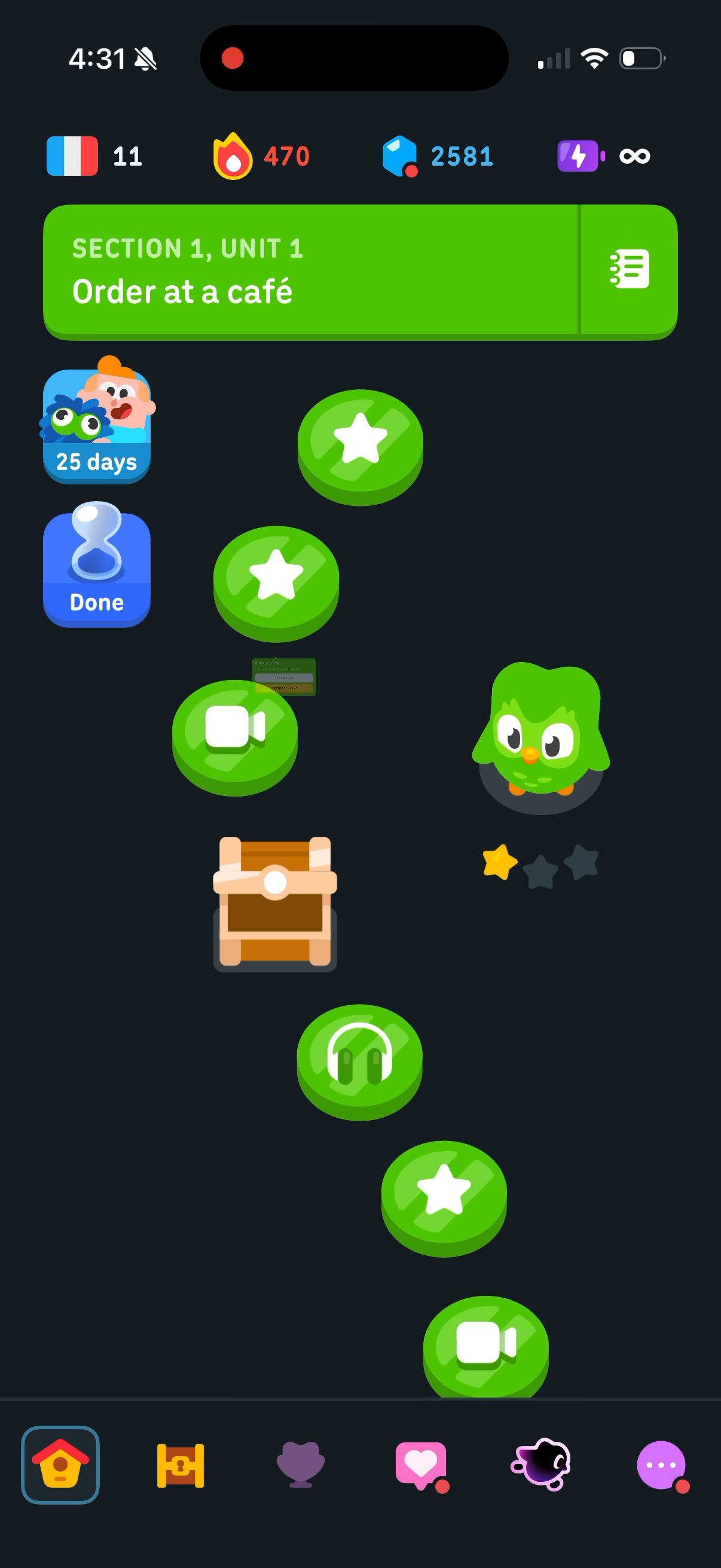
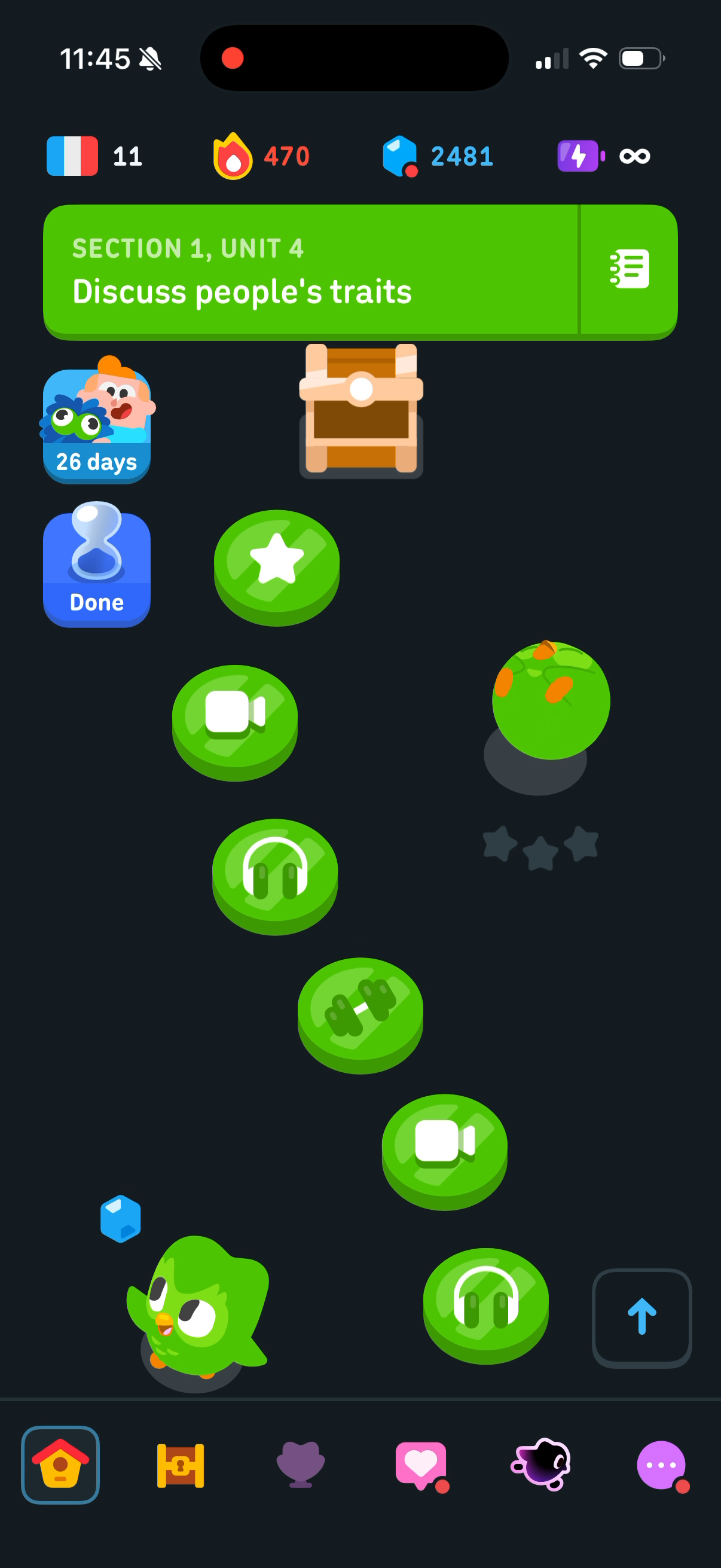
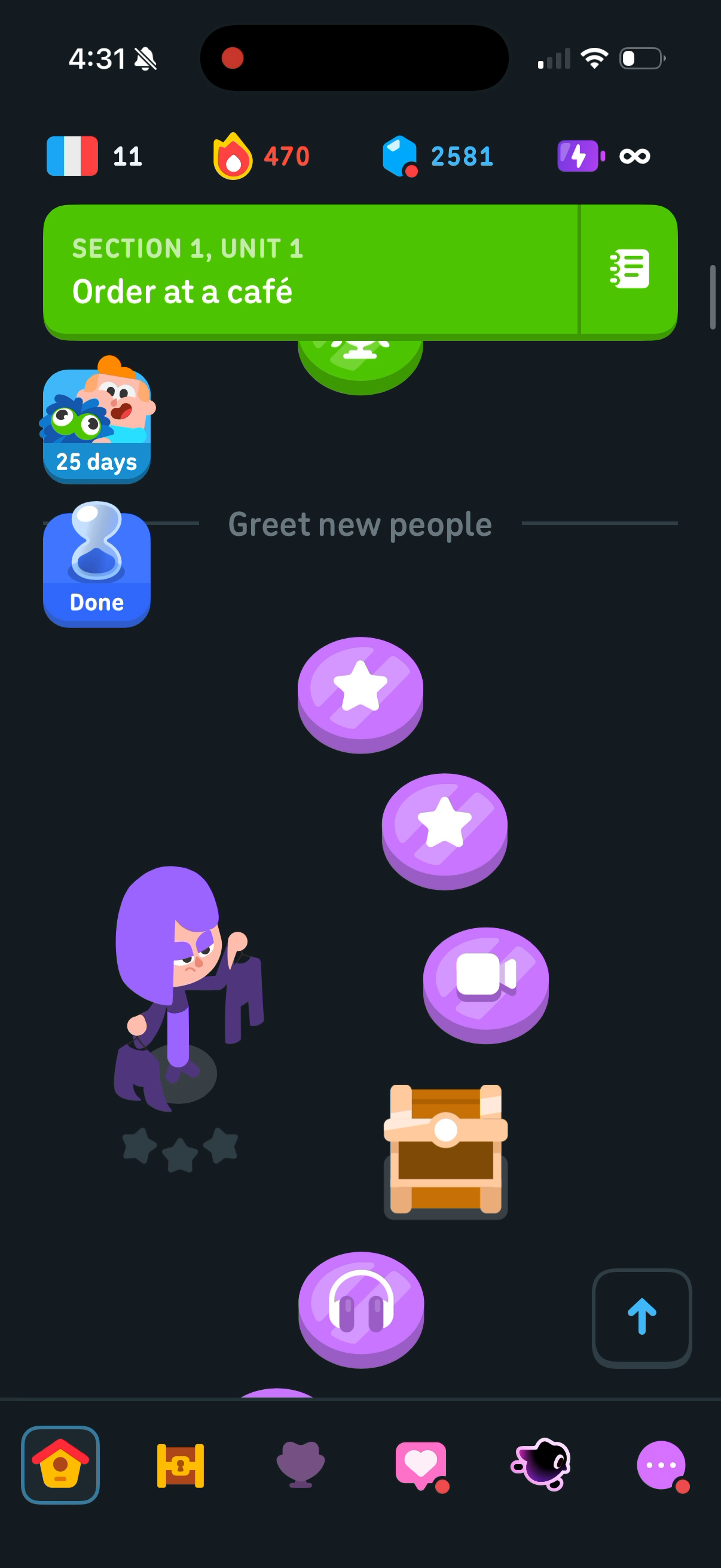
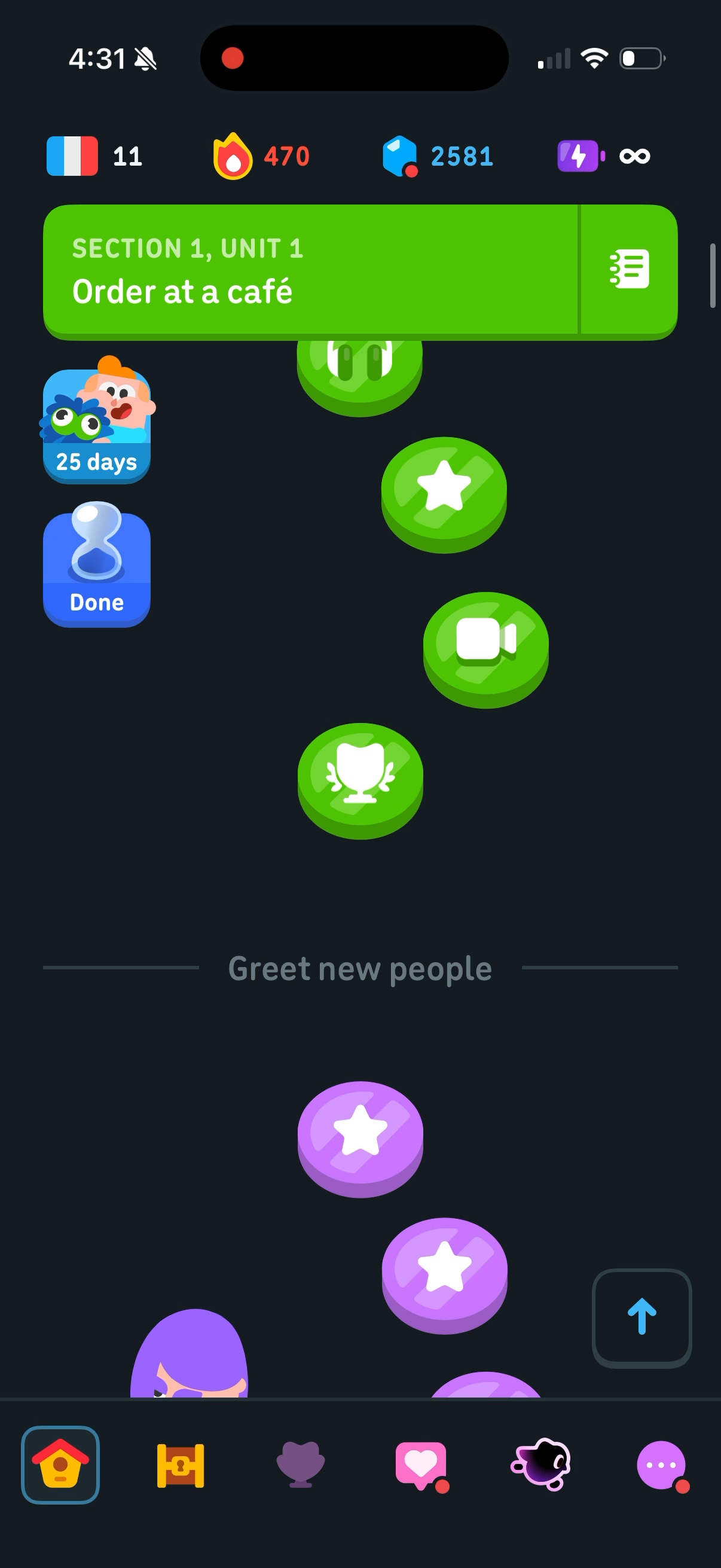
The Linear Path is a single line of lessons in a fixed order, with only one lesson open at a time. Duolingo decides what comes next, so every session starts without a decision and every finished lesson moves the learner visibly forward.
Skill tree, before 2022
5 skills open
The learner picks one.
Lesson path, since 2022
1 lesson open
The path has already picked.
One open lesson gets more sessions started. The path shows one open lesson, and tapping it begins. The tree it replaced kept several skills open and left the choice to learners, who told Duolingo they were "not sure whether they're using Duolingo the 'correct' or 'best' way." Every choice before a lesson is a chance to leave without doing one. With the choice gone, more app opens turn into a lesson.
A set order keeps lessons in the sweet spot. Duolingo says it gives learners material "just a little bit more advanced than what you already know," and that this level of difficulty "leads to more engagement and better learning." Its student model, Birdbrain, predicts the chance of a correct answer for every exercise before serving it. In practice, the coursework is designed so that a learner gets the vast majority of exercises right the first time. A lesson full of wrong answers is frustrating, and frustrated learners quit. A set order is what makes this possible, because Duolingo always knows what the learner has already been taught.
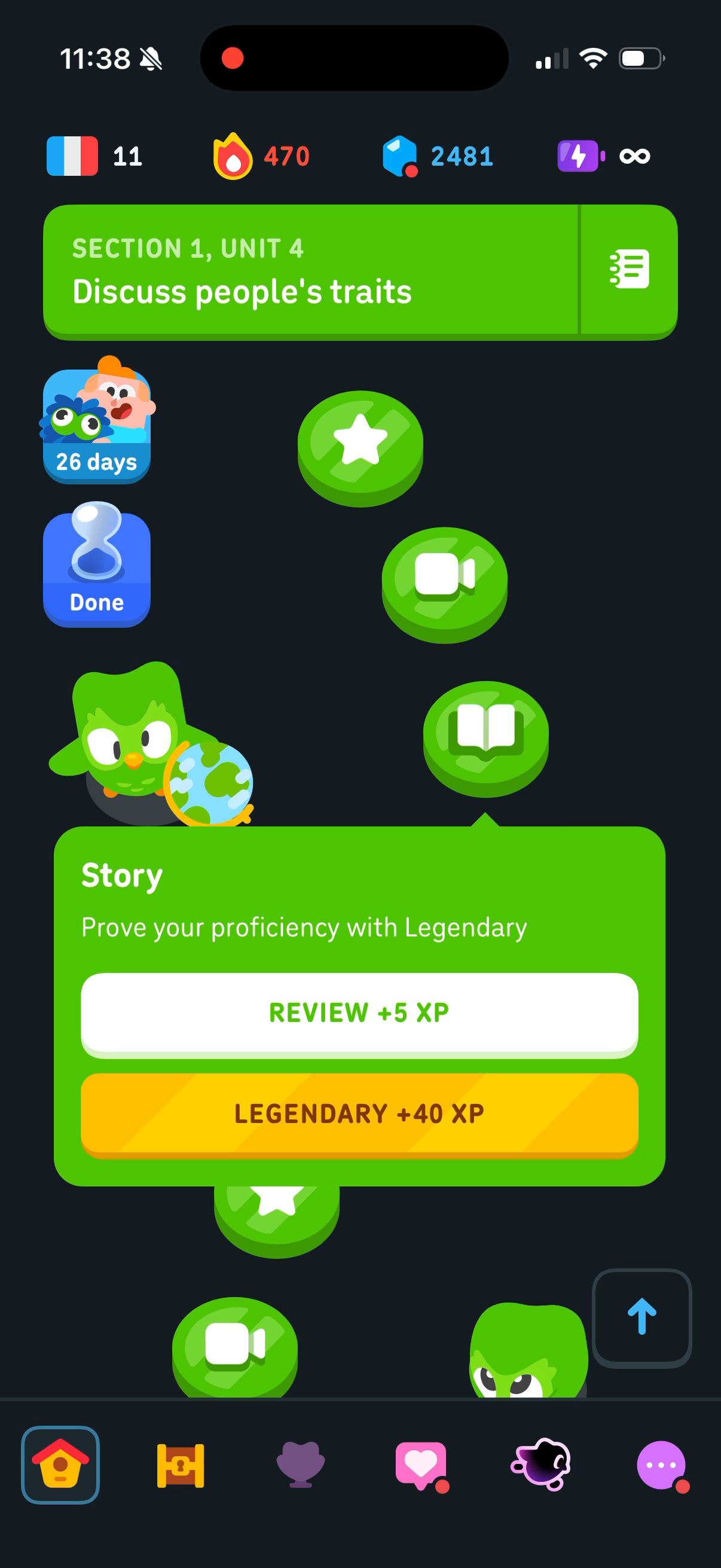
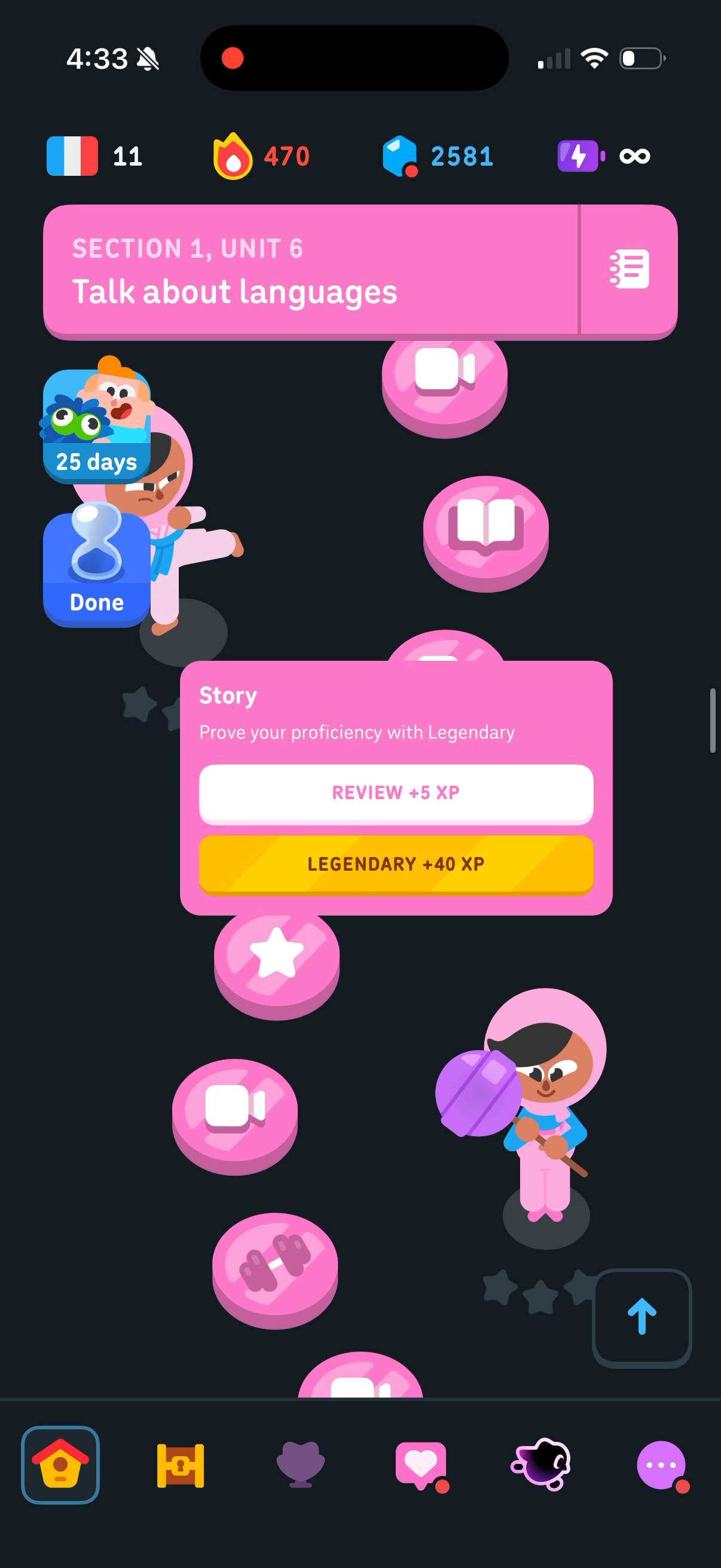
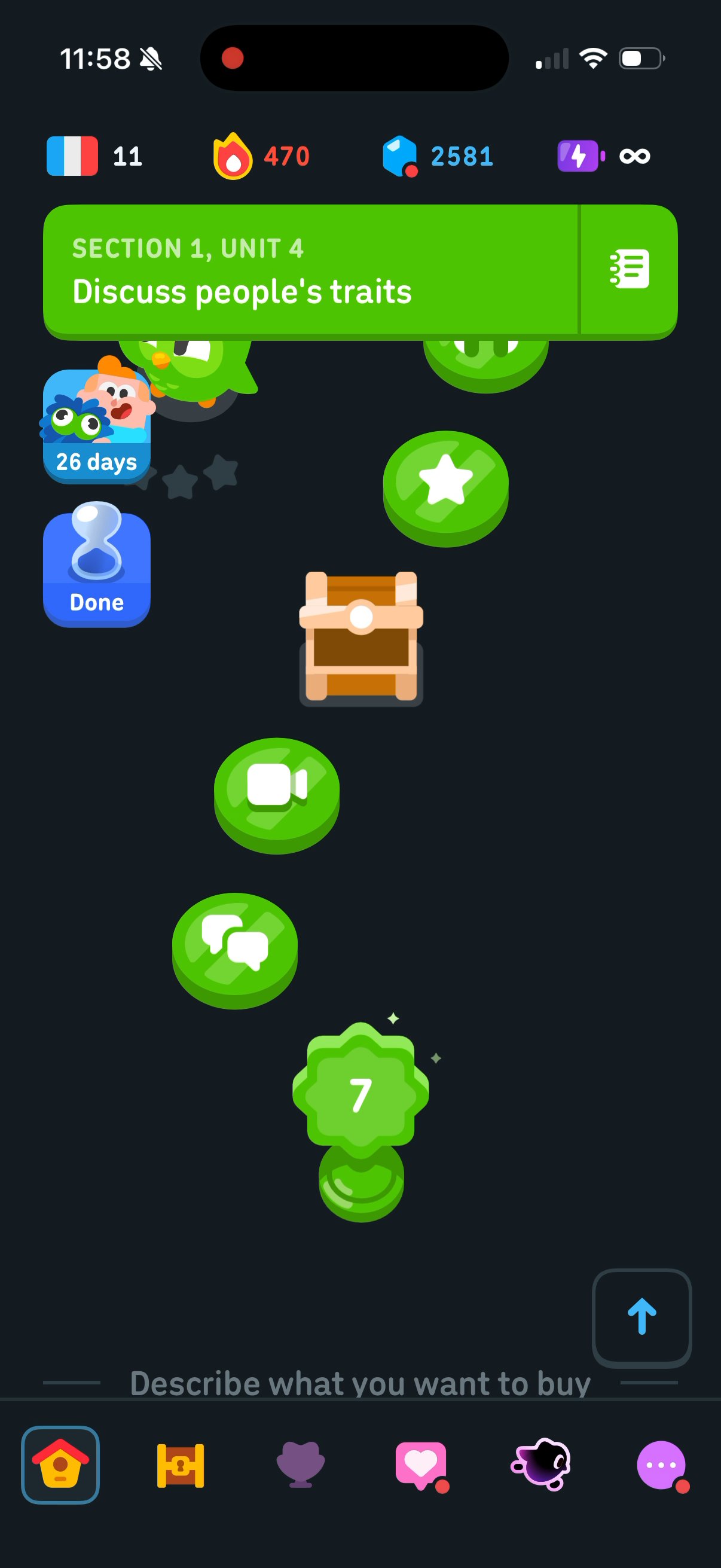
A visible line makes every lesson feel like progress. The home screen is the course: finished lessons in colour above, the open one marked, the rest grey below. Each completed lesson moves the learner one visible step down the line. Learning a language produces no visible result for months, so the path supplies one. Two minutes of French changes nothing a learner can hear yet, but it changes where they stand on the map, and that is a reason to do another.
Get the full Duolingo breakdown.
- —100+ screenshots
- —50+ push notification variations
- —A deep dive into Duolingo's most important systems
Get it free. Just answer three questions.
02PROGRESS LAYER
Mini Milestones
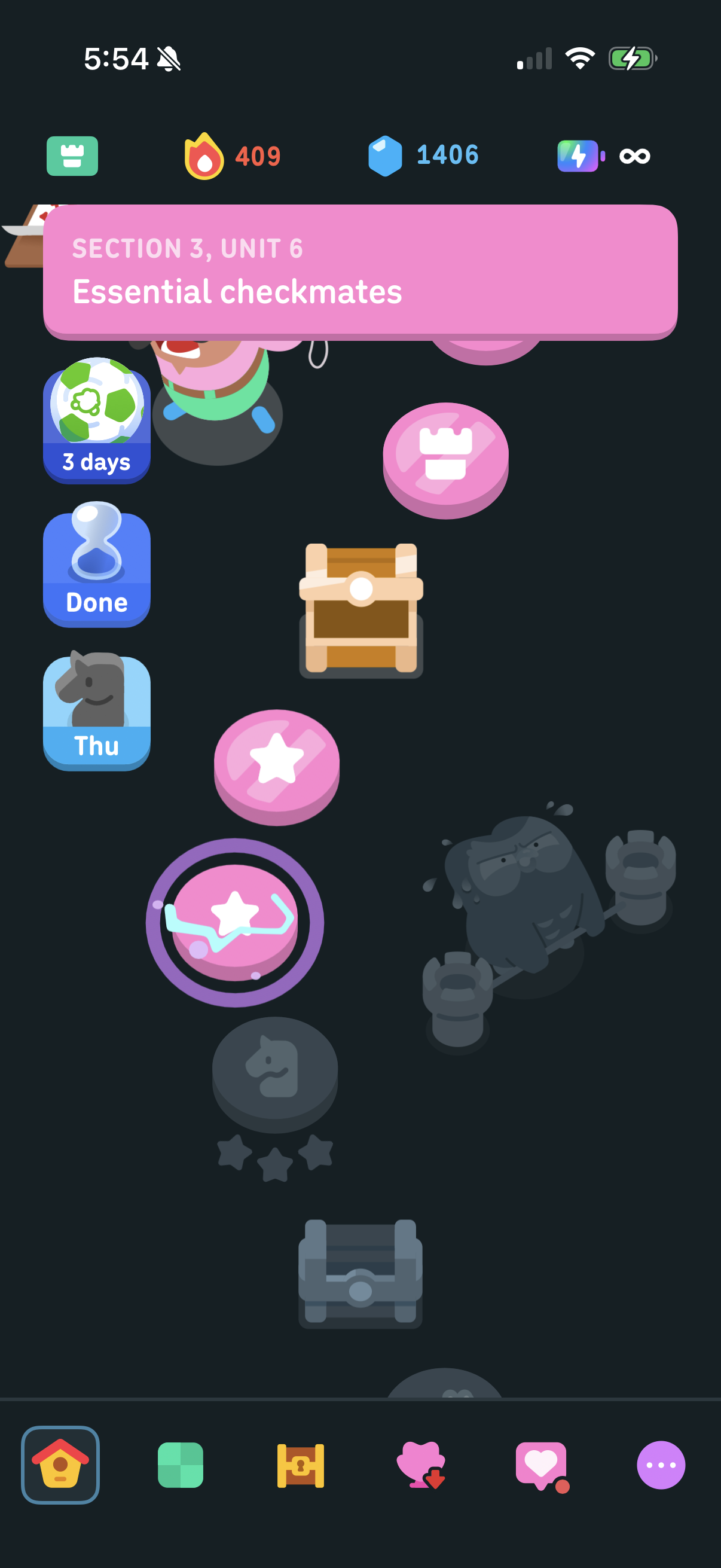
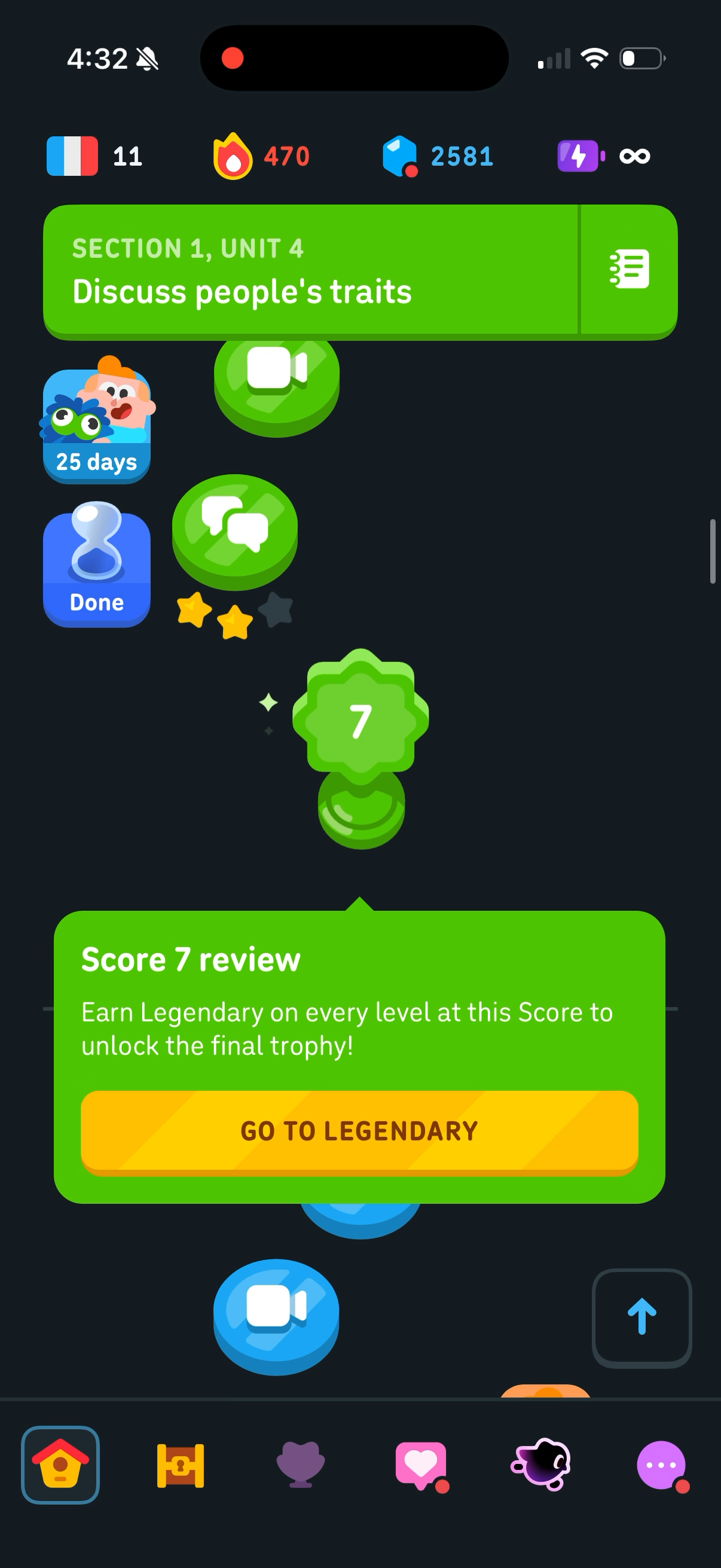
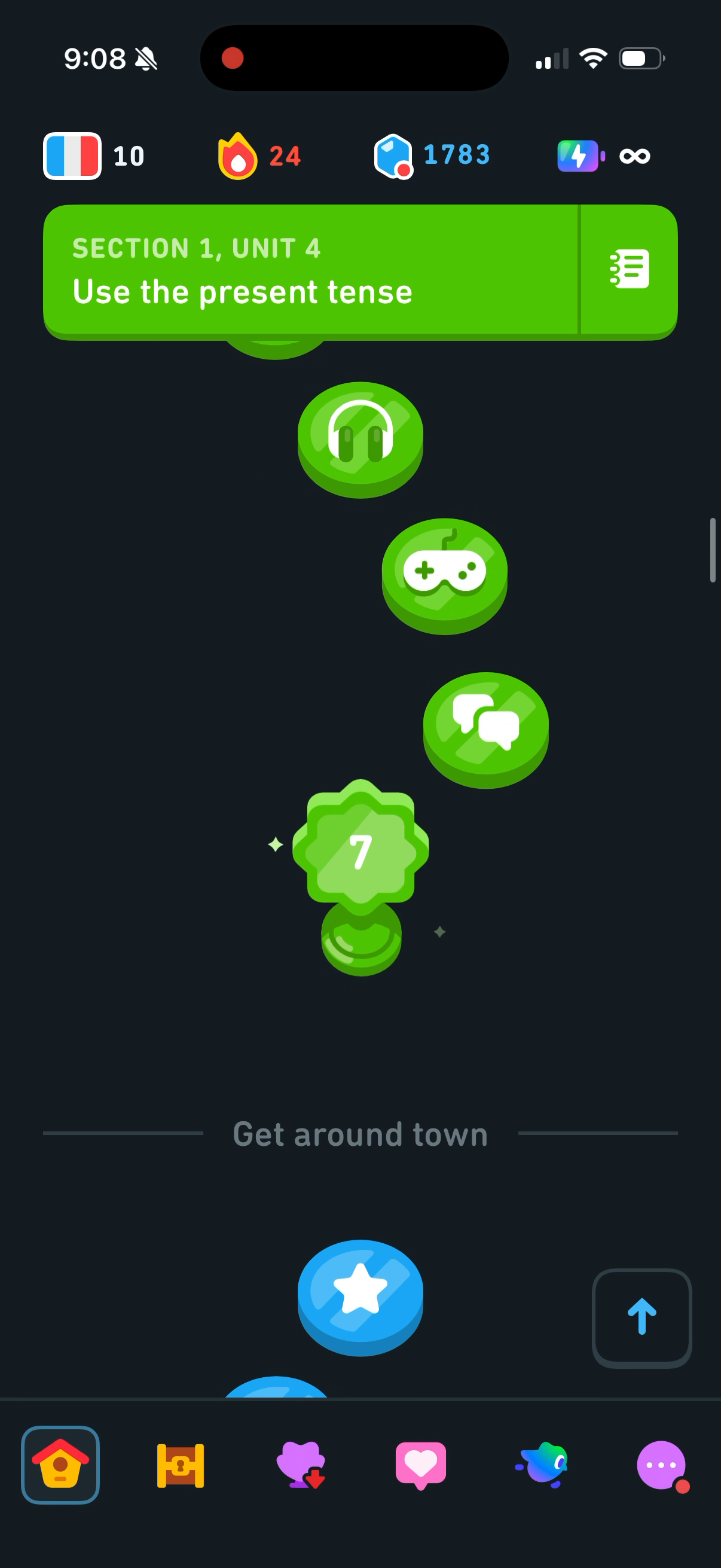
Mini Milestones are the small completions spaced along the path: a finished lesson, a chest, a unit trophy. They are placed so the next one is always a few lessons away, which keeps the user in the final stretch of something at all times.
Mini milestone
Chest
Major milestone
Unit trophy
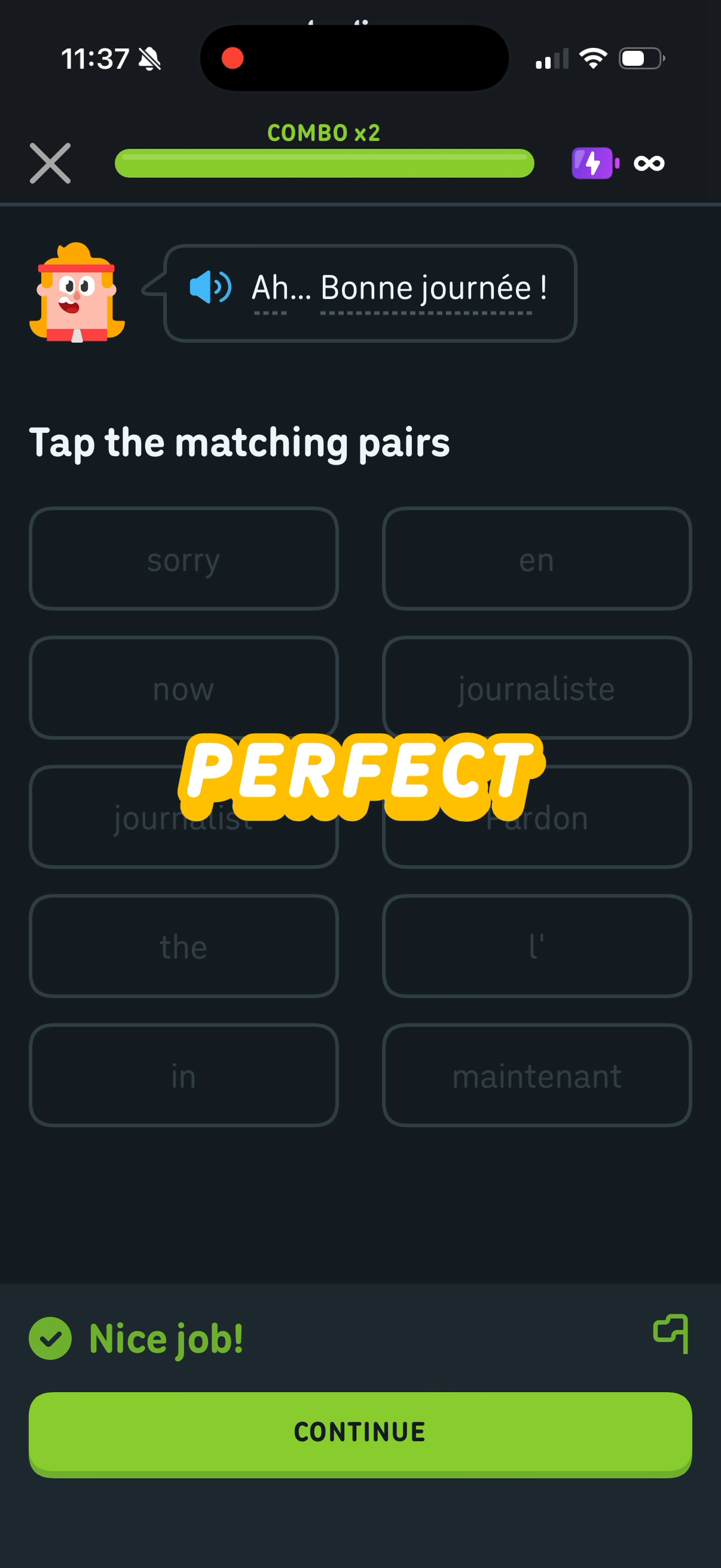
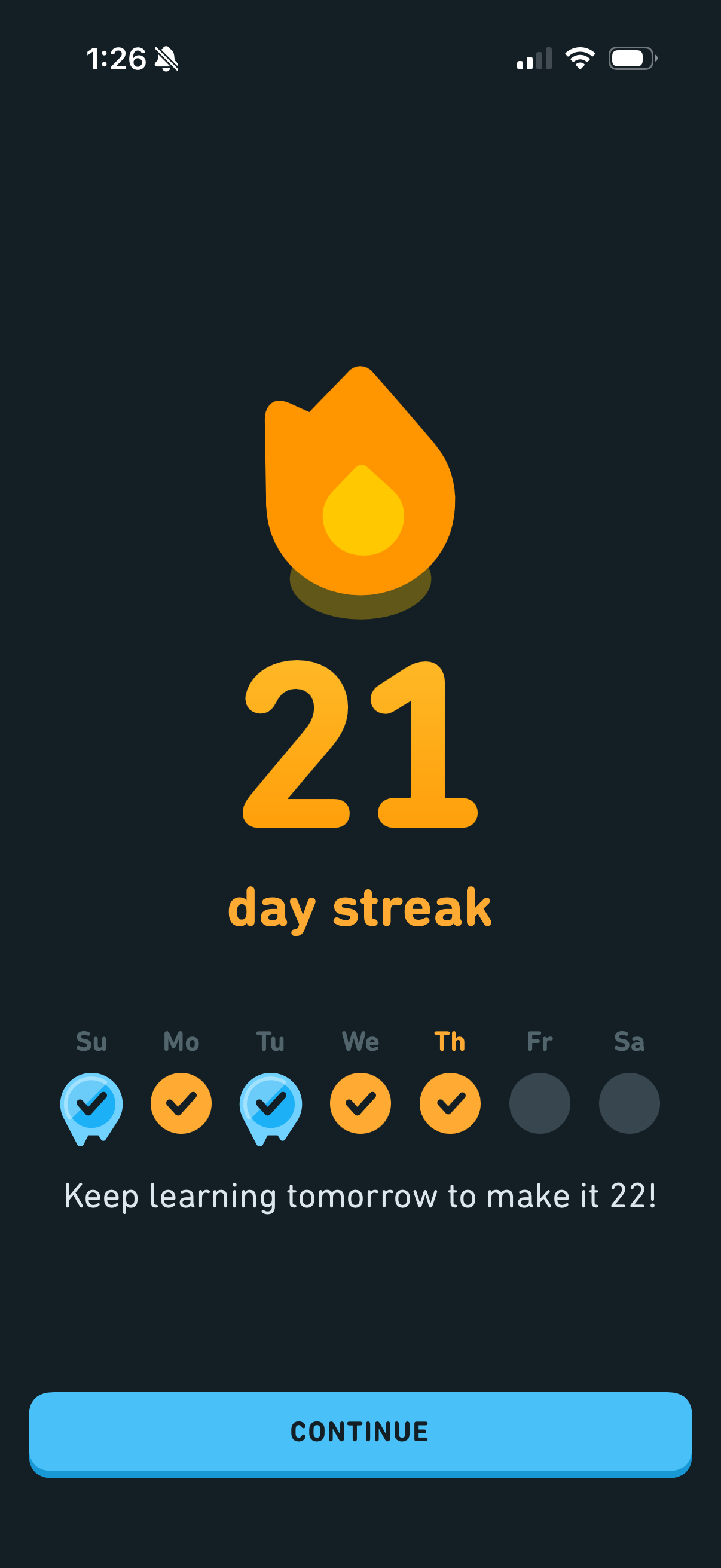
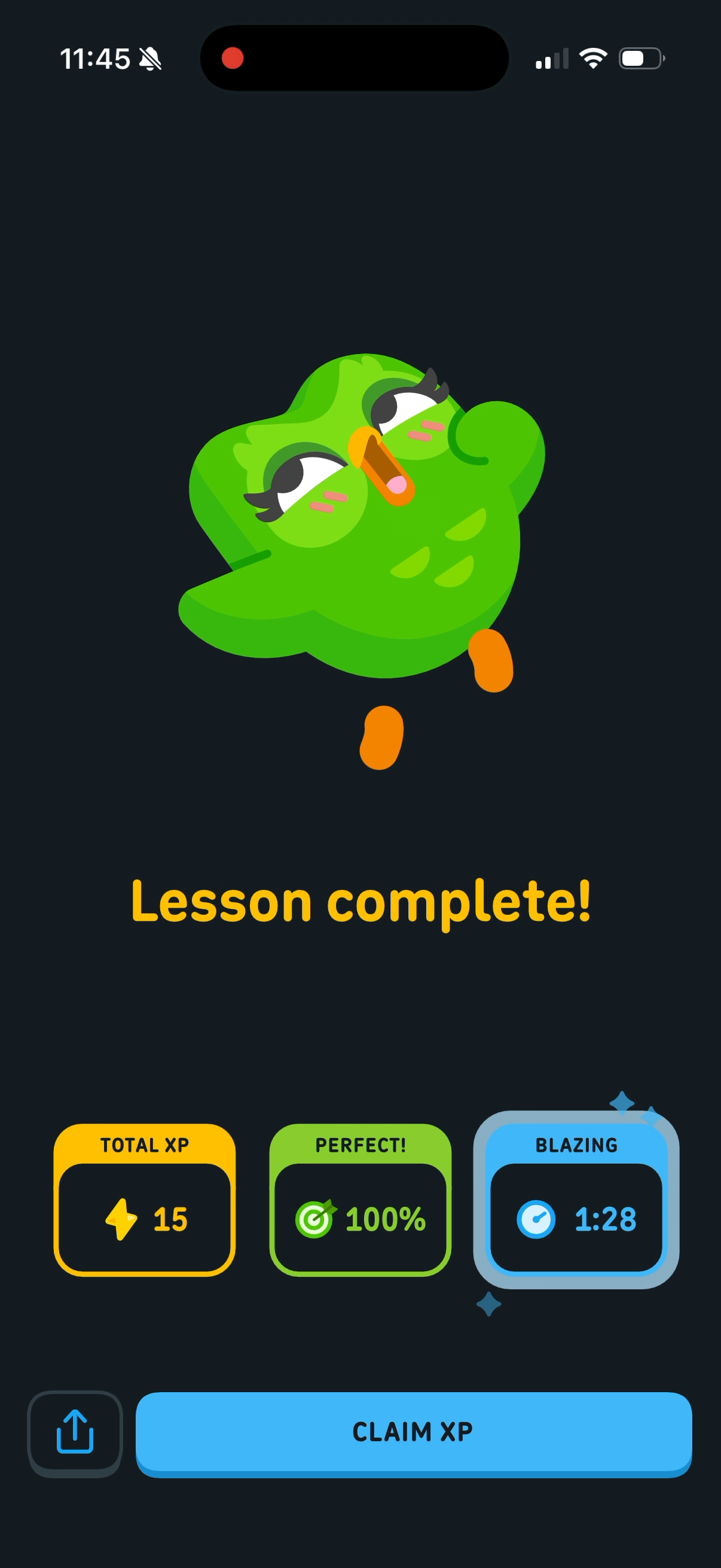
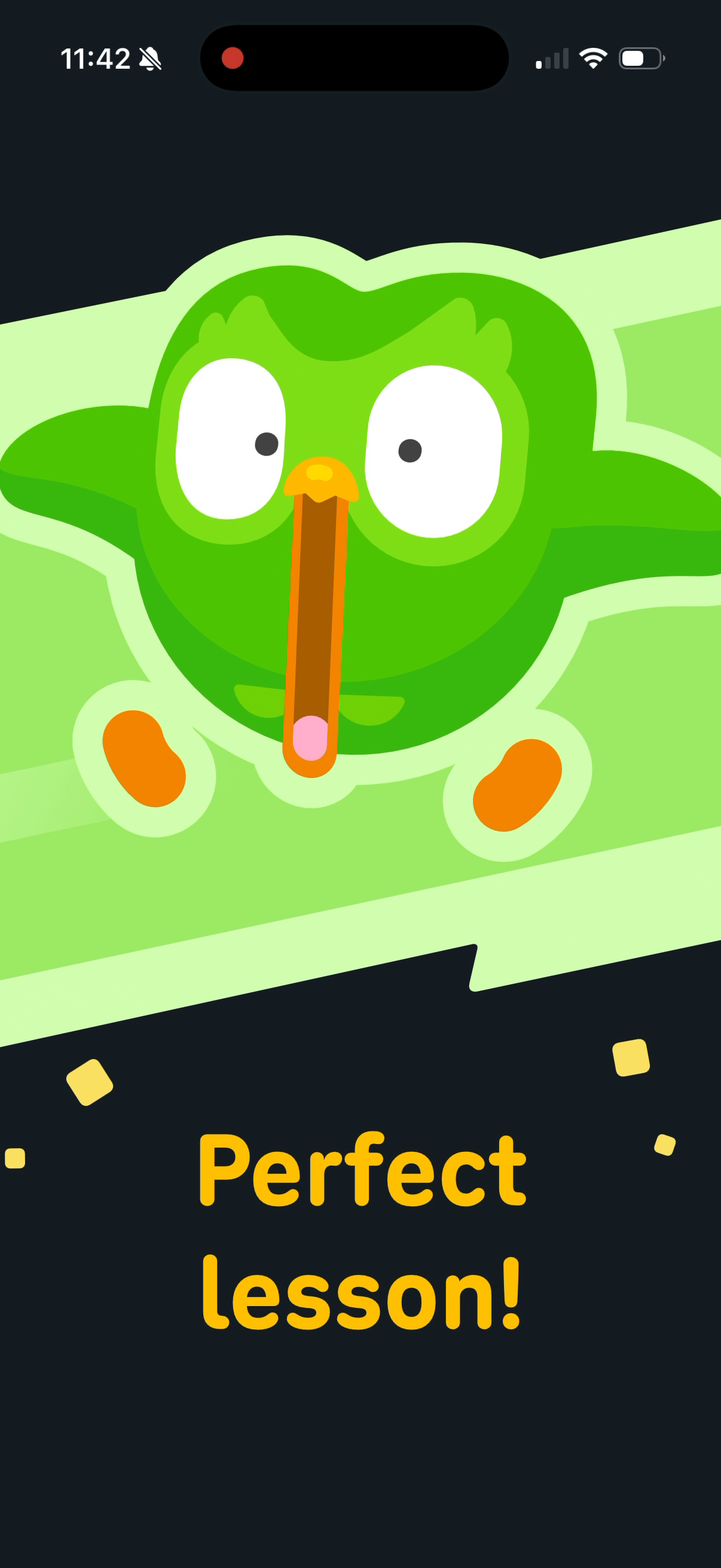
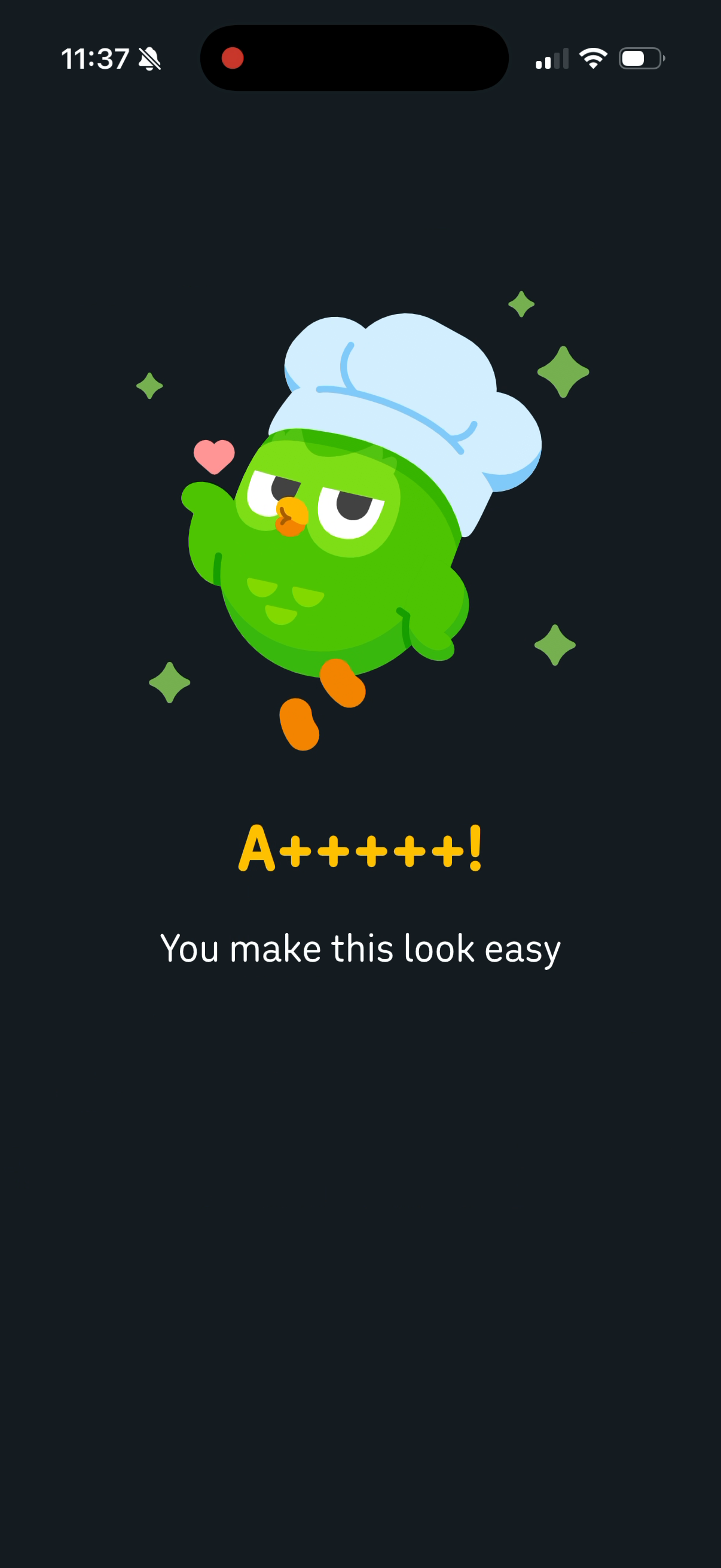
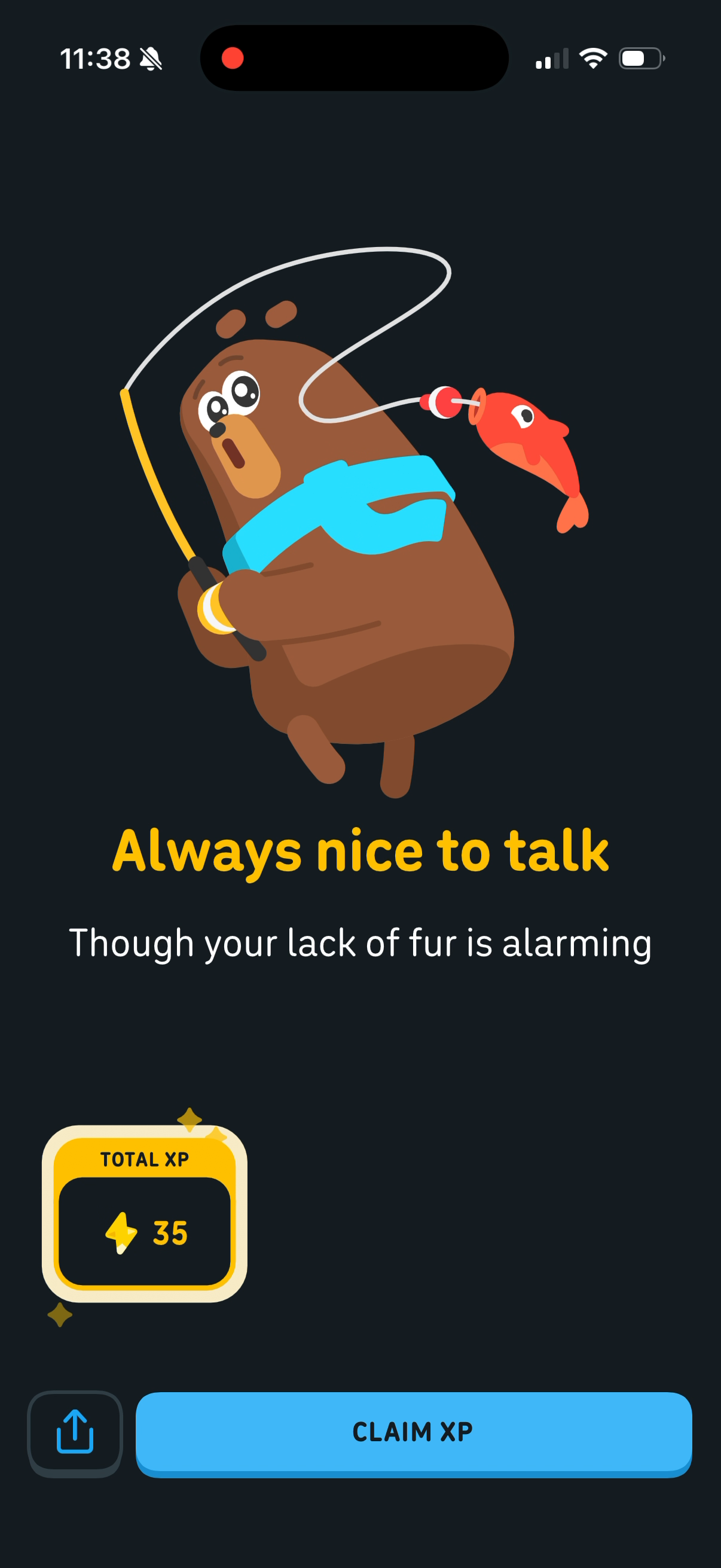
Even the smallest effort gets its own finish. Every lesson closes on a full-screen completion that counts up XP, accuracy, and time. One in our recording read 15 XP, 100%, 1:28. A two-minute session is small enough to feel like it did not count, and the completion screen is there to say that it did. The path then shows the next lesson open, so the win and the next step arrive together.
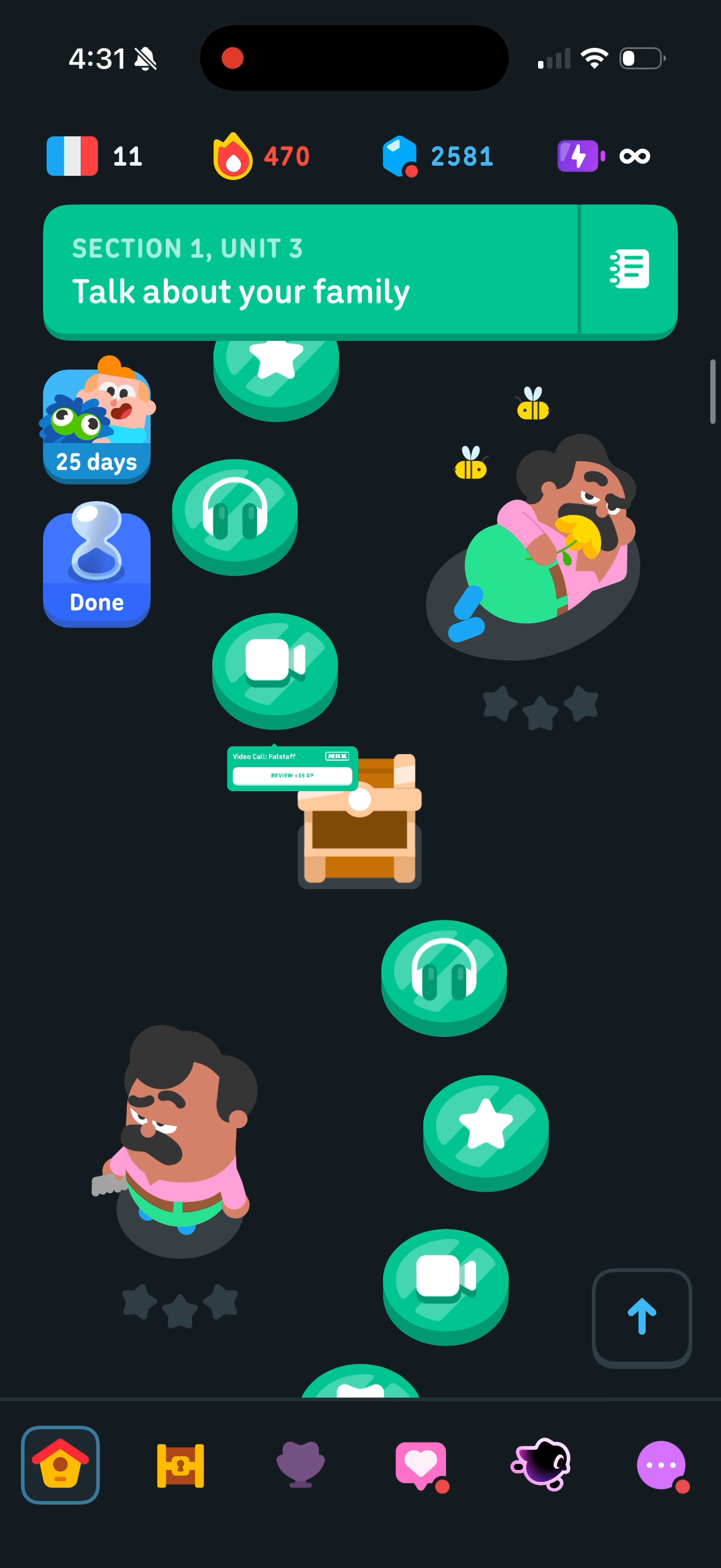
Rewards sit on the route, where the user sees them coming. Chests sit directly on the path between lessons and open only on arrival. For instance, in the first French unit one comes after three lessons, and the fourth unit has two. Putting the chest on the route means the user sees it every time they look for their next lesson. A reward one lesson away is a reason to do that lesson now, which a reward on a separate screen would not be.
The long course is cut into goals that finish soon. Fluency is years away, so the path sets nearer targets: units named for an ability, such as "Order at a café", each closed by a trophy. For instance, the French units we mapped run six to sixteen lessons, about a week of ordinary use. Nobody plans their evening around a goal that is years off. A trophy a few lessons away is something a learner can decide to go and get.
Milestones Along One Unit

 Chest, on the routeTrophy, end of the unit
03PACING LAYER
Lesson Mix
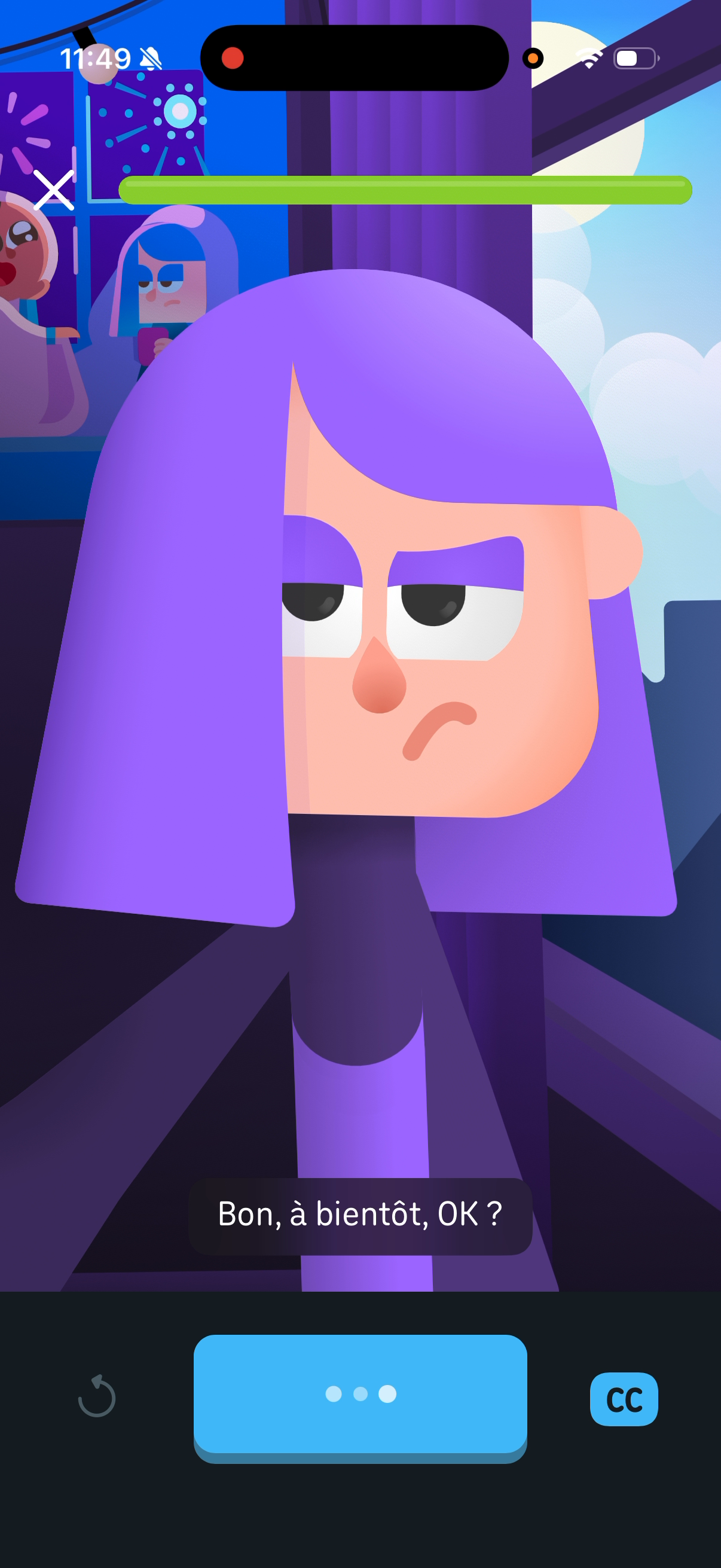
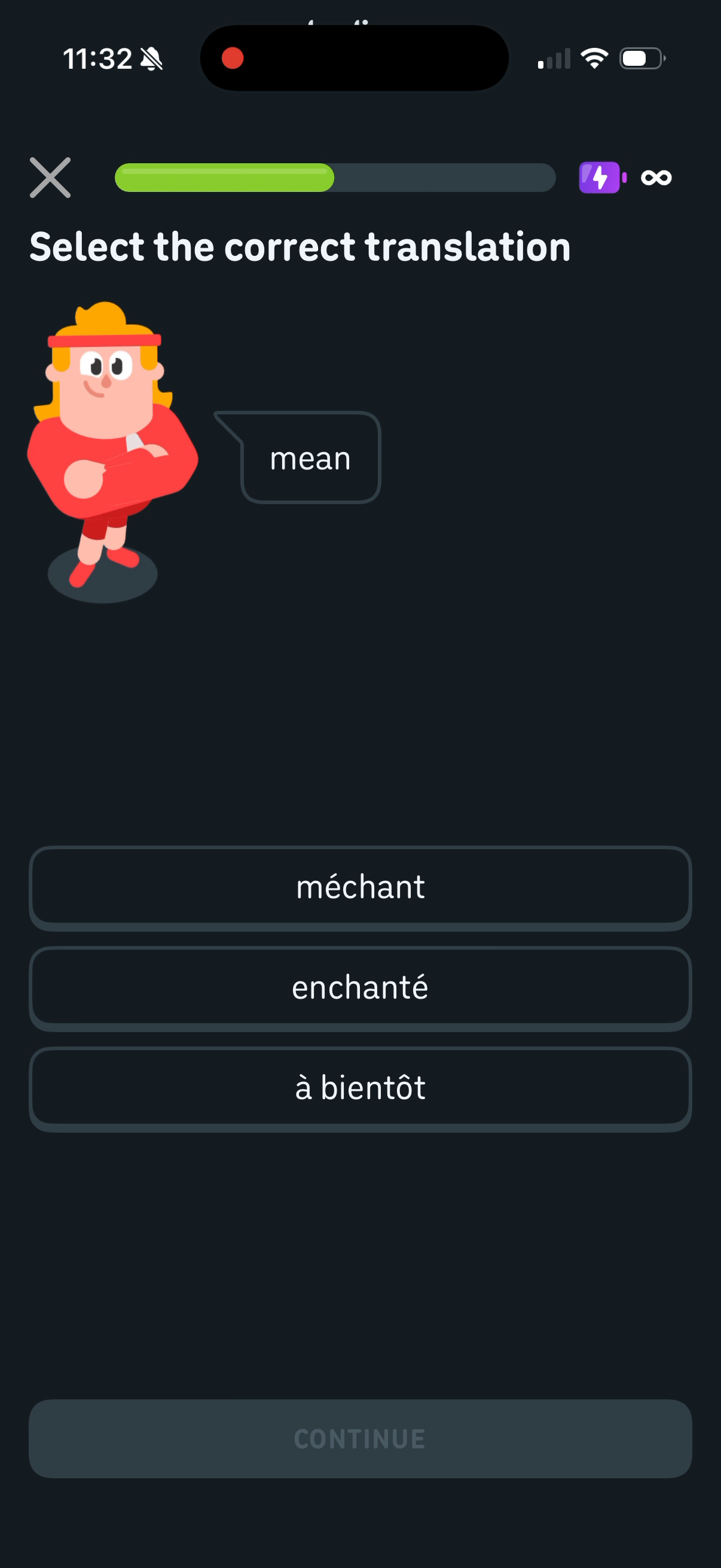
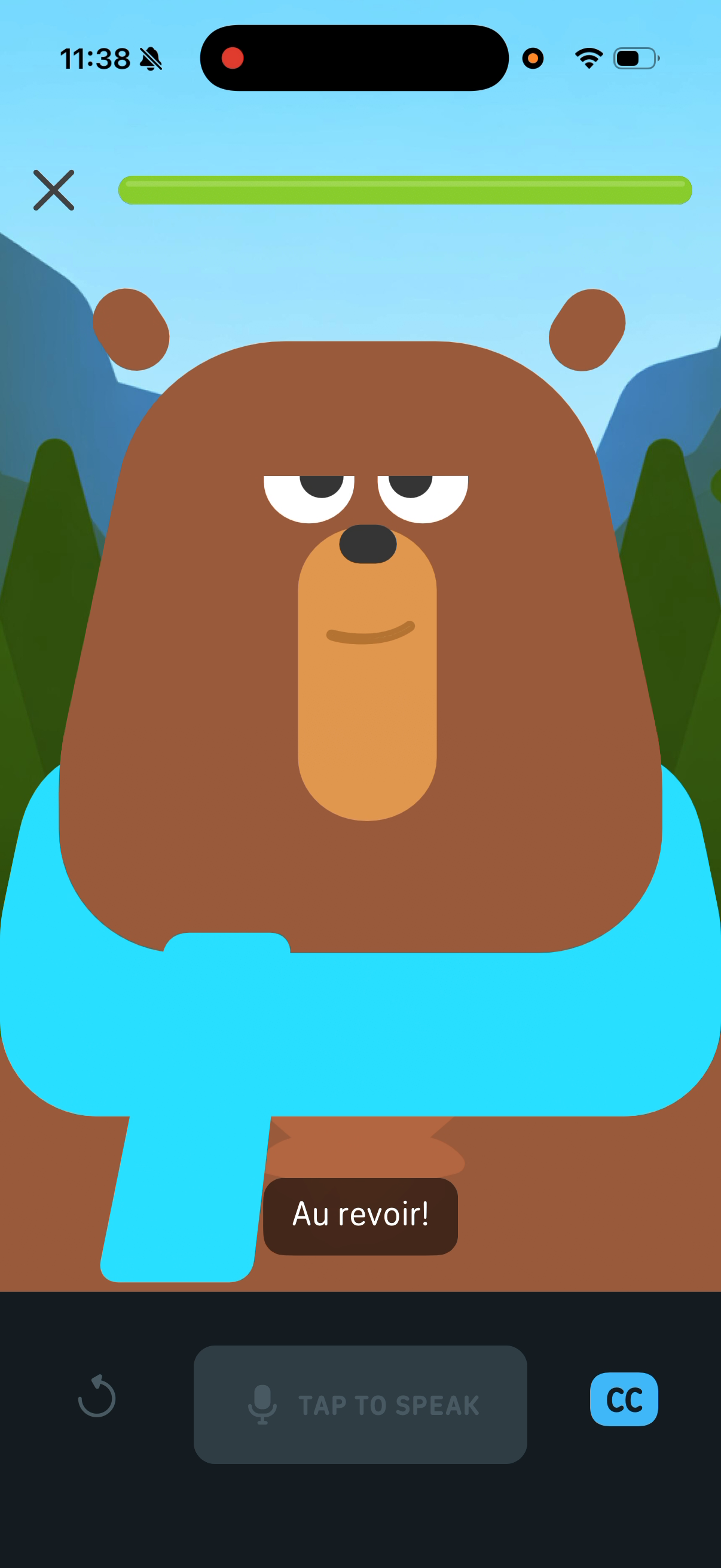
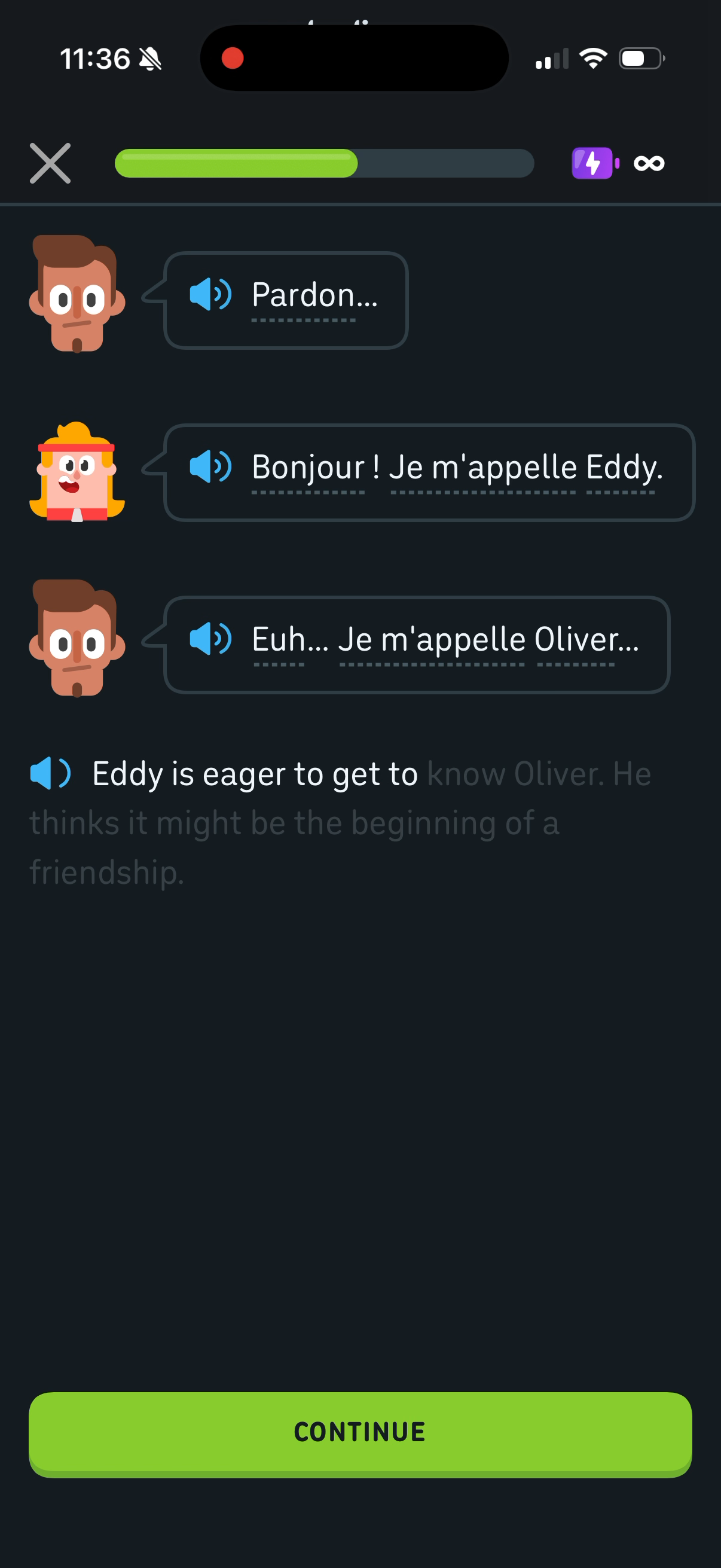
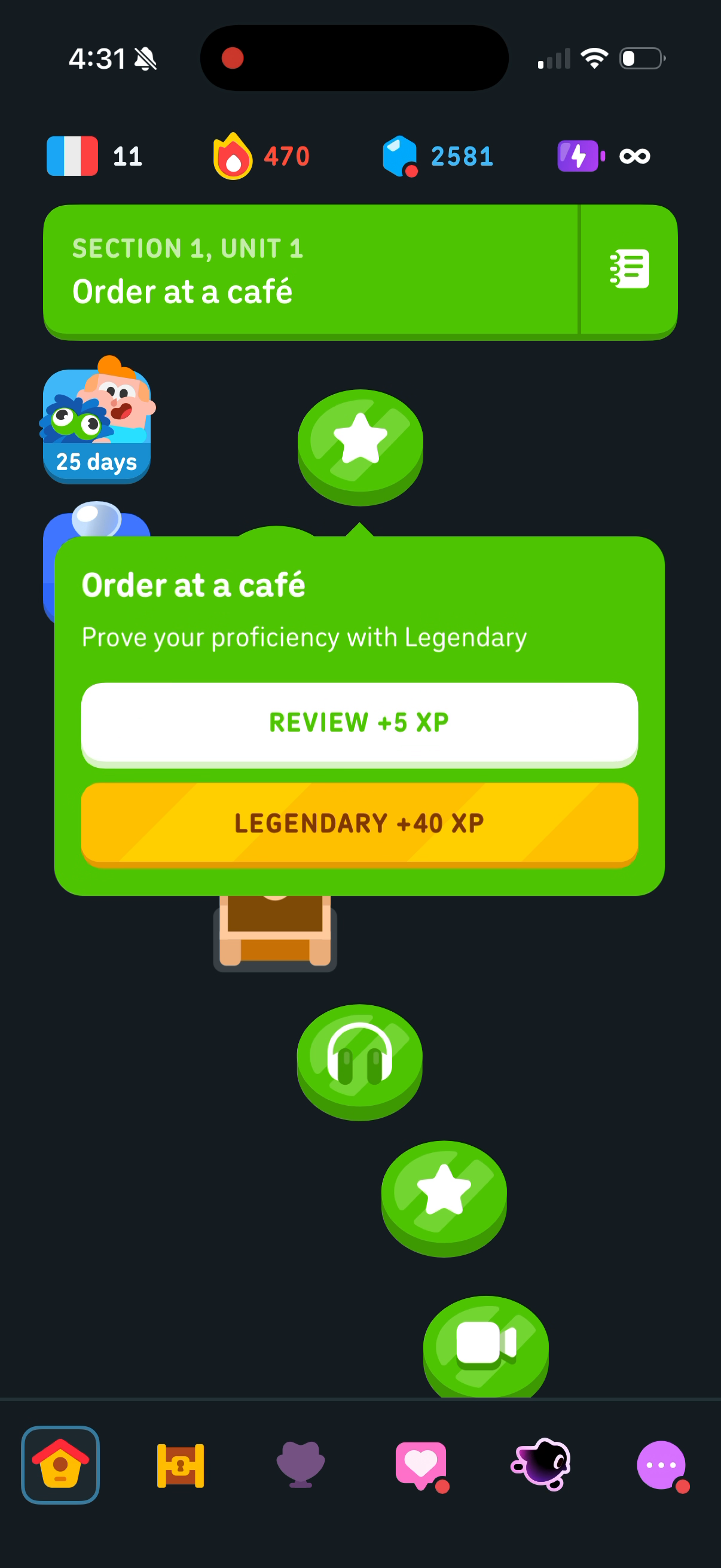
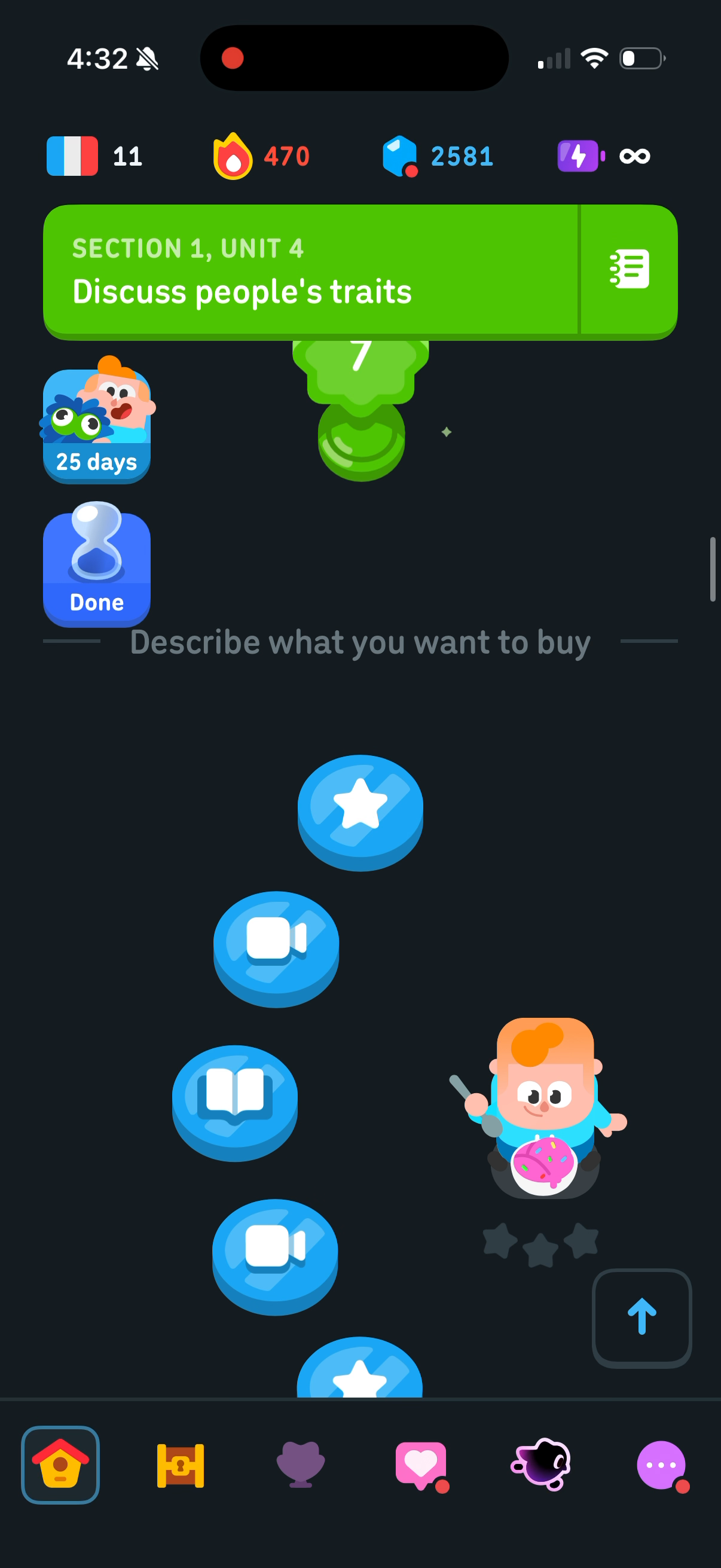
Lesson Mix is the path's control over what kind of session comes next: a standard lesson, a video call, a story, a radio show. It keeps a long linear path from turning into a grind, because two sessions in a row rarely feel alike.
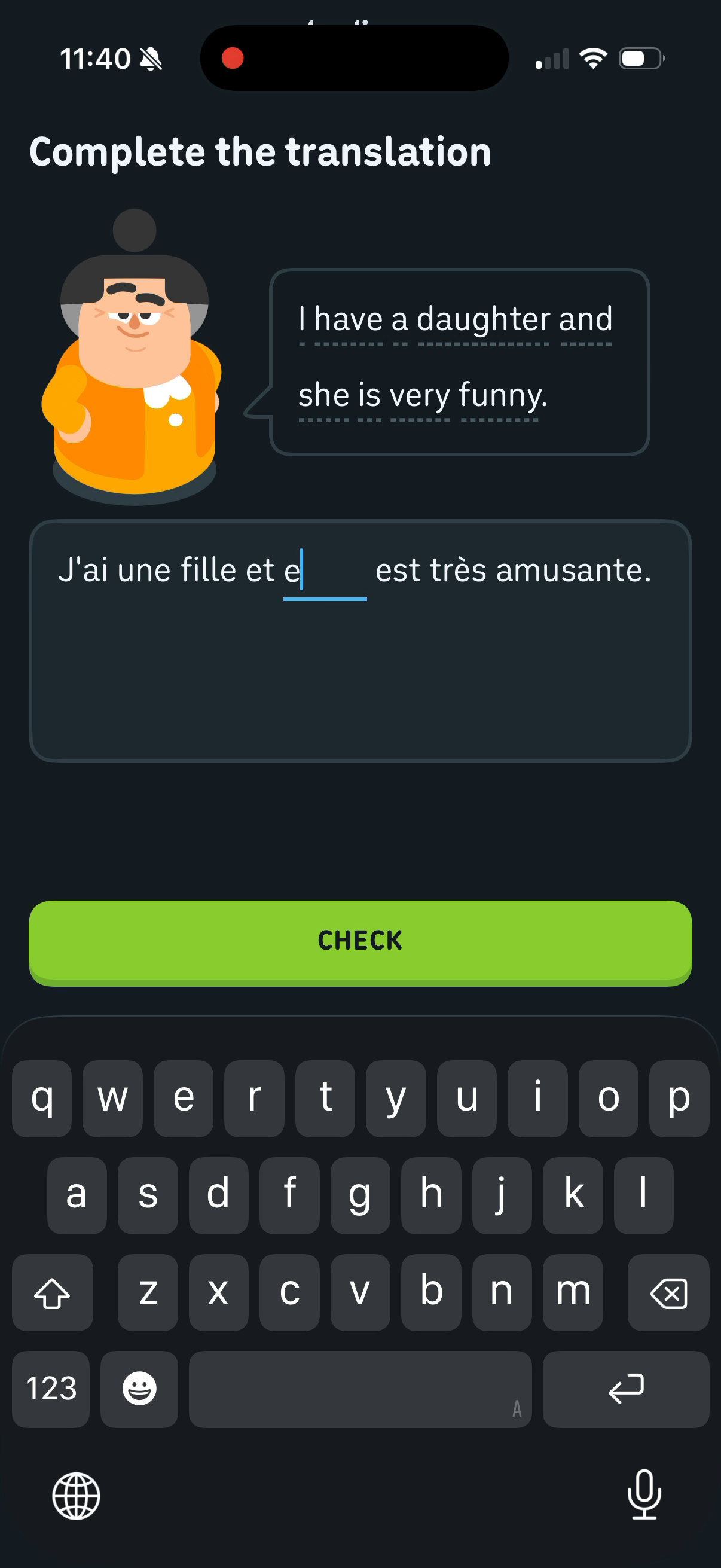
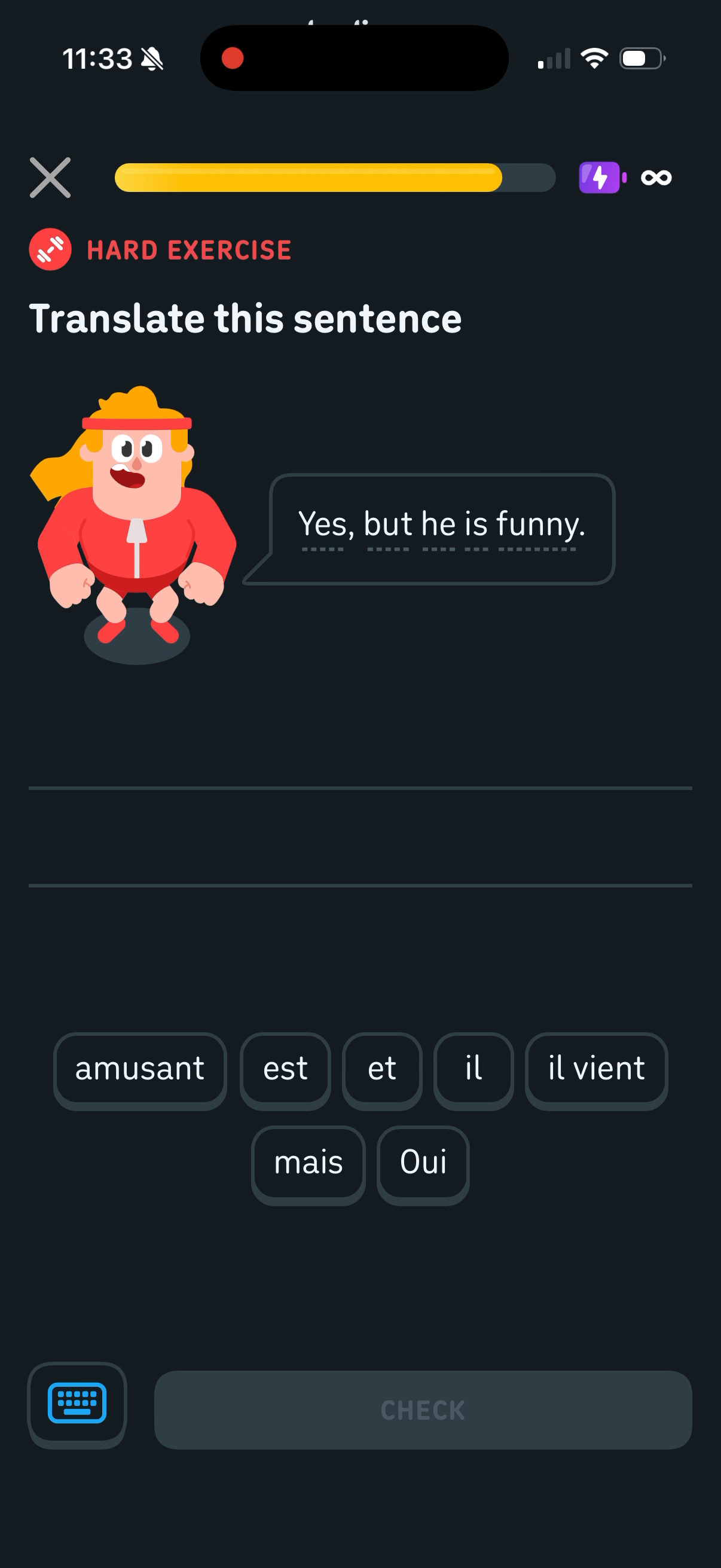
Standard lesson
Video call
Story
Radio
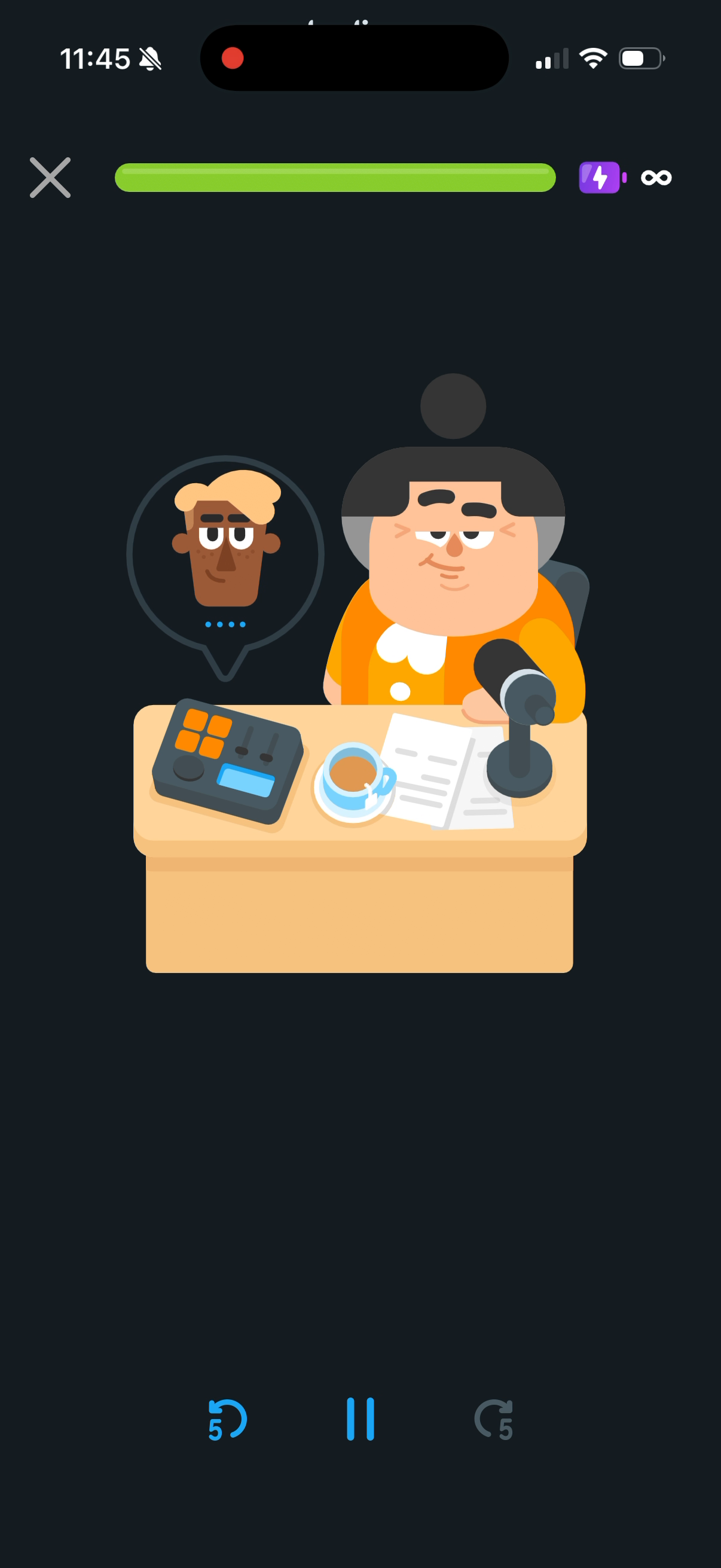
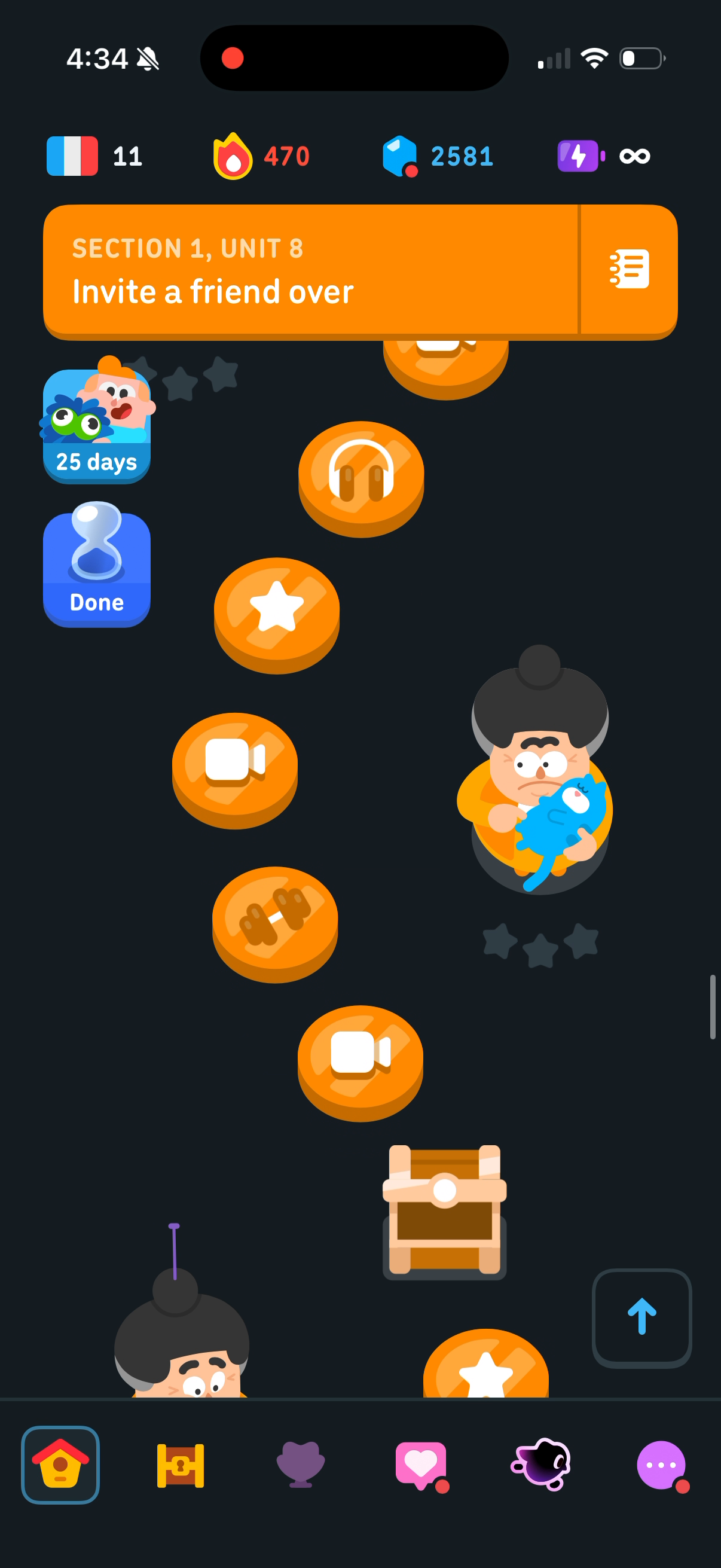
New formats make repetition feel new. Learning takes repeated passes over the same material, and repetition gets dull. Duolingo repeats the material and changes the format: exercises, then a story, a radio show, a video call. For instance, in the eight French units we mapped, every unit has three standard lessons, and about three in four lessons are another format. The learner gets the practice they need without the feeling of doing the same thing again.
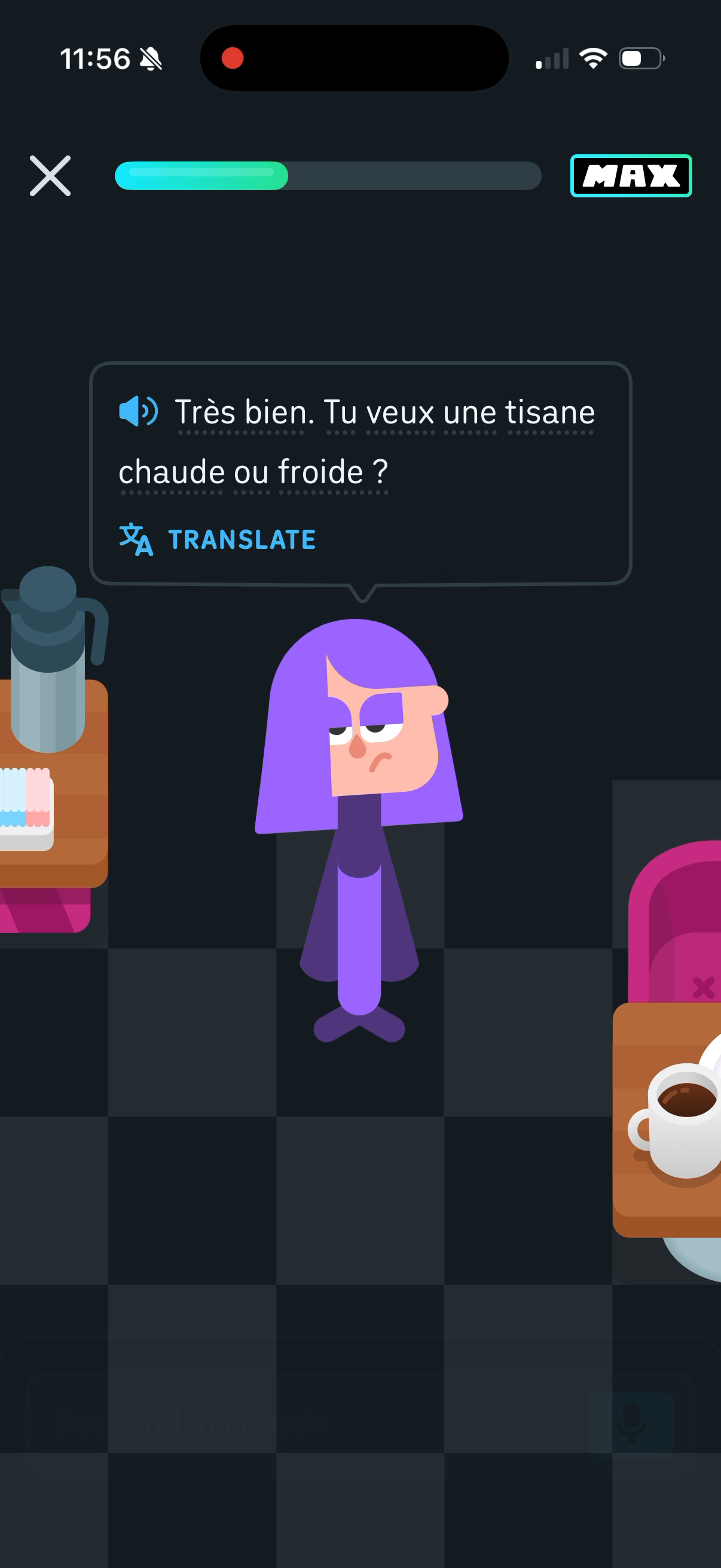
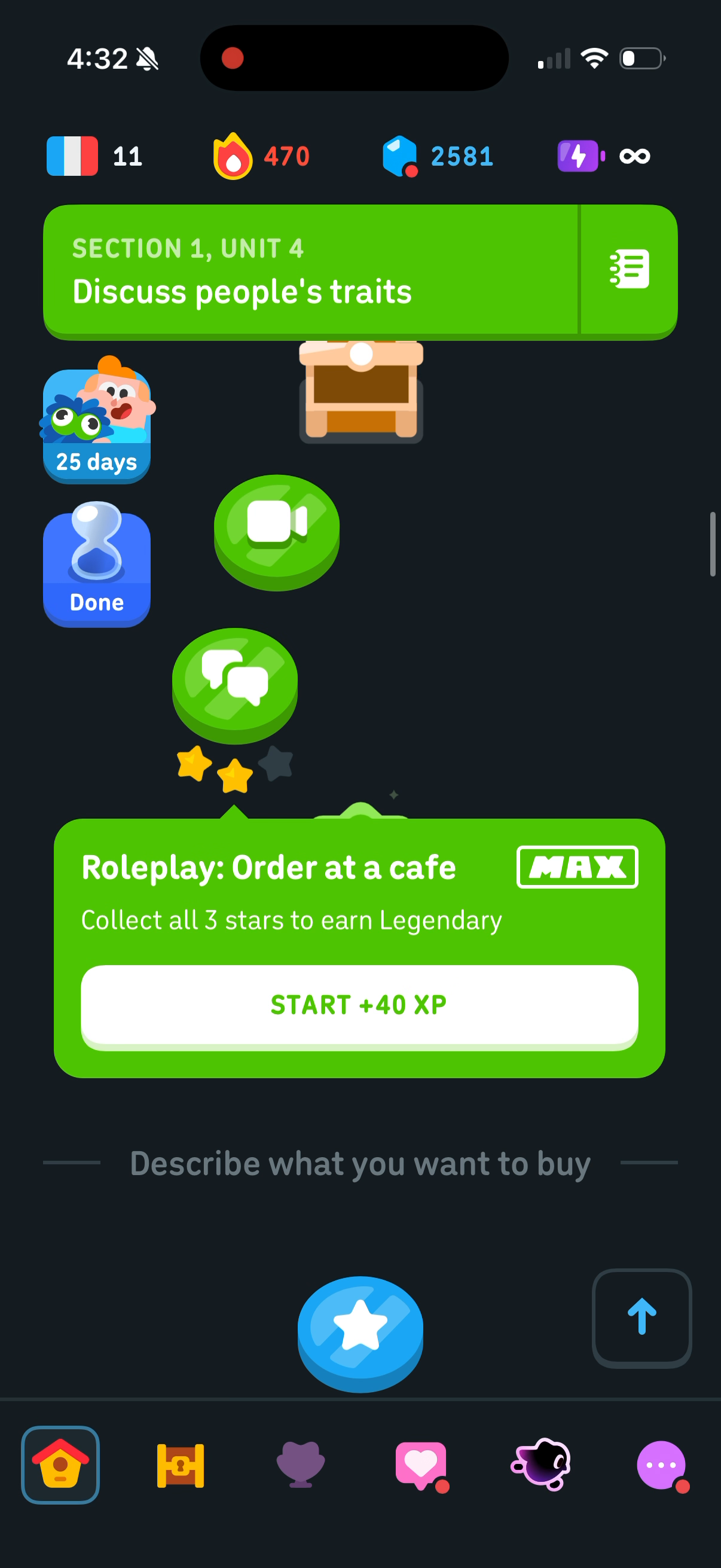
The mix climbs from recognising to using. The formats ask for different amounts of effort: tapping a tile is recognition, following a radio show is comprehension, holding a conversation is production. For instance, in the French units we mapped, the last lesson before every trophy is a conversation, a video call early on and a roleplay later. Ending there gives the learner proof. Someone who has just held a conversation, however simple, knows the unit worked.
New lesson types unlock as the learner advances. For instance, in French, the first three units use standard lessons, video calls, and radio. The fourth adds stories, practice sessions, and roleplays, and adventures appear a unit later. Holding formats back does two jobs. It keeps the first days simple for a beginner, and it gives a returning learner something they have not seen before.
Lesson Mix Across Eight Units
Linear Path
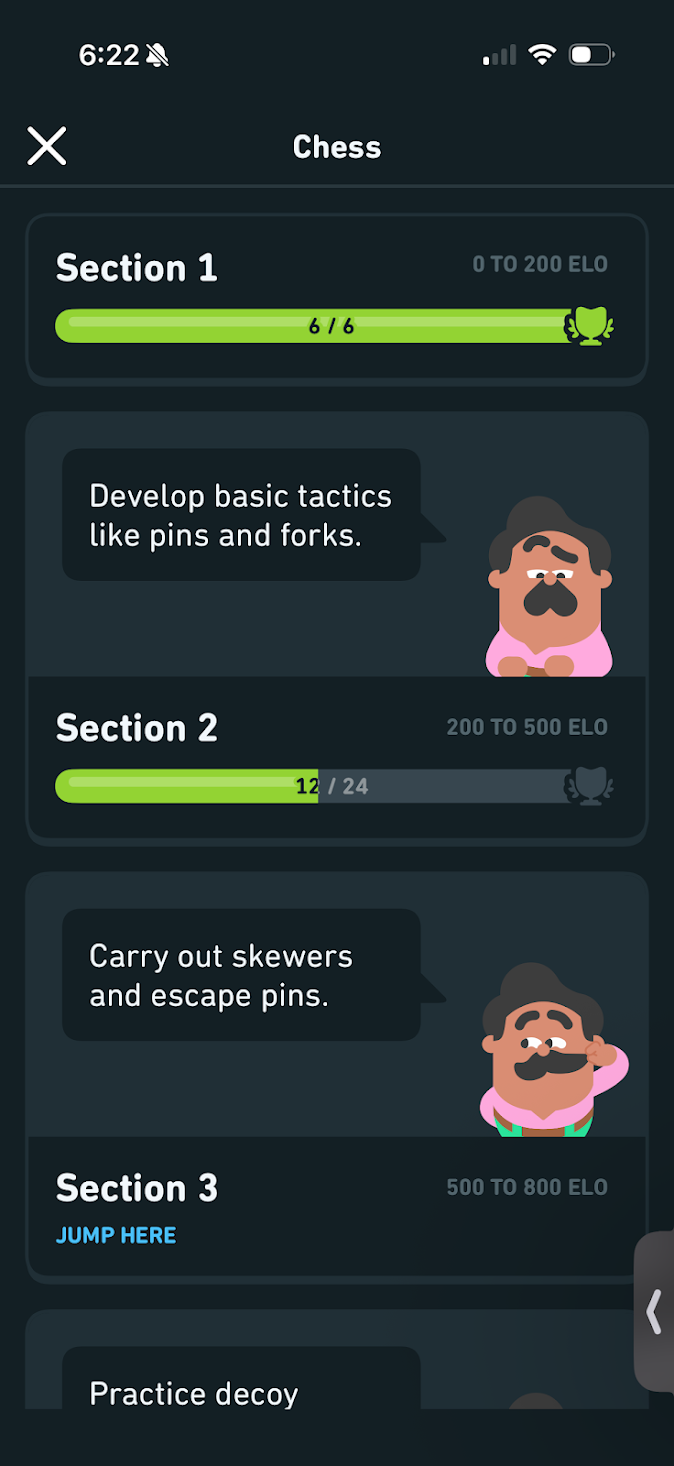
The home screen itself — one line, finished lessons above, one lesson open, the rest still ahead.
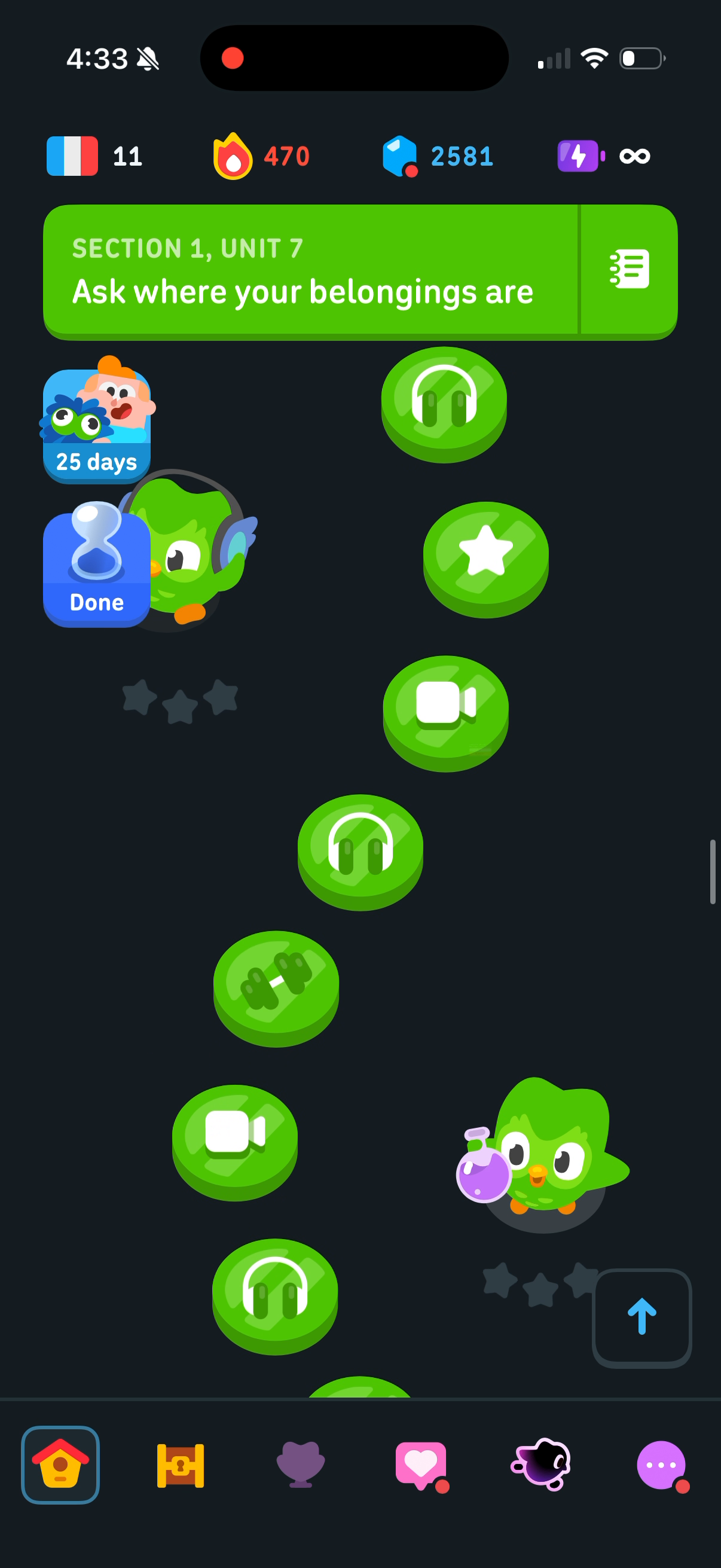
Mini Milestones
Lesson completions, chests on the route, unit trophies, and the divider that announces the next goal.
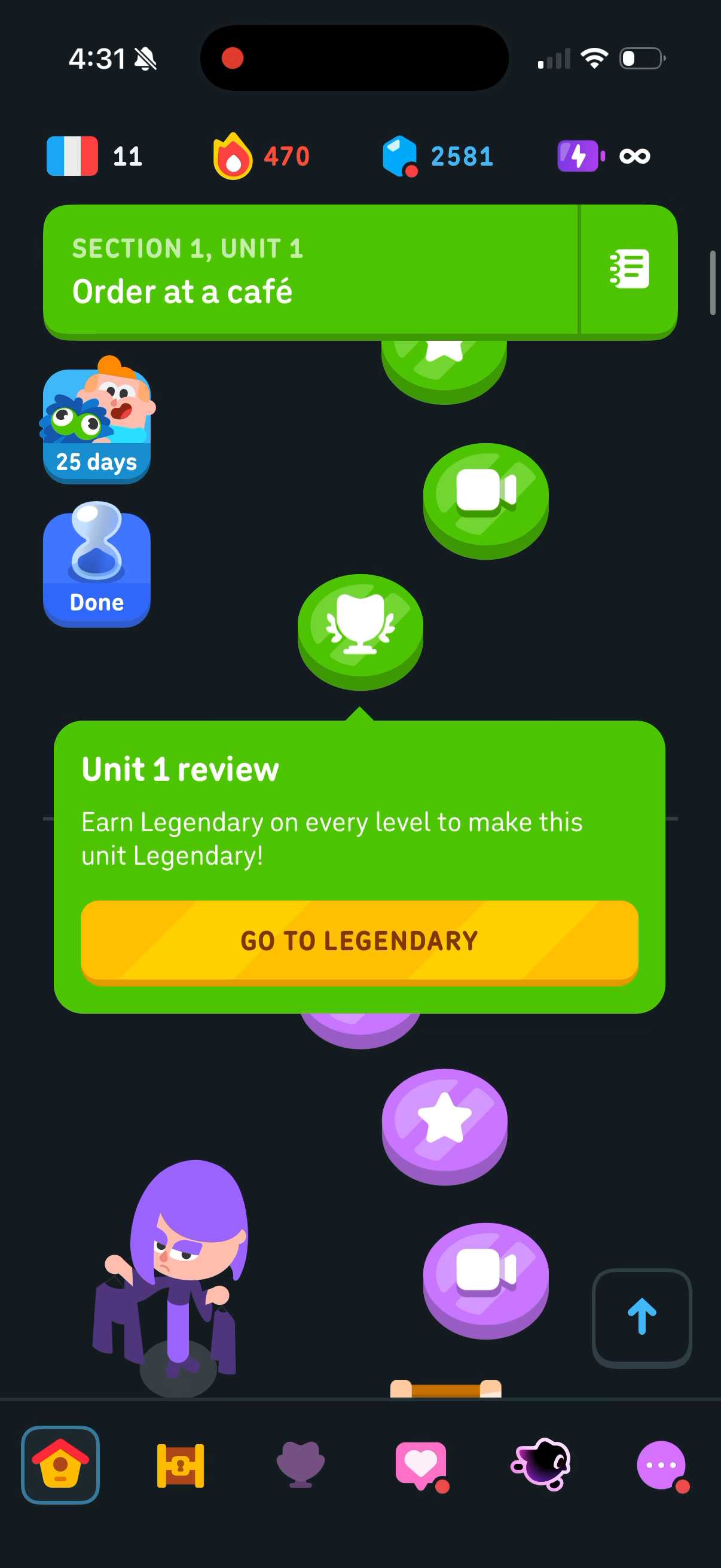
Lesson Mix
The formats a unit rotates through — standard lessons, video calls, radio, stories and roleplay.